Folding Trekking Poles: The Ultimate Guide to Compact Stability
Discover how collapsible hiking poles can transform your backpacking experience with unmatched portability, comfort, and support on any trail.
FIND YOUR PERFECT PAIRWhy Folding Trekking Poles? For hikers and backpackers who value packability without sacrificing performance, folding trekking poles are a game-changer. Unlike traditional telescopic poles that collapse into two or three sections, folding poles break down into four or five compact segments connected by an internal tension cord. When folded, they can shrink to as little as 12–15 inches, fitting easily into a daypack, carry-on luggage, or the side pocket of your backpack.
Why Choose Folding Trekking Poles?
Folding trekking poles, also known as Z-poles or collapsible hiking sticks, offer a unique blend of convenience and functionality. Whether you're navigating rocky terrain, crossing streams, or simply seeking better balance on steep descents, these poles provide essential support. Their compact design makes them ideal for travelers, ultralight backpackers, and anyone who wants to keep their gear organized. If you're planning a weekend camping trip or a hiking trip, folding poles are a smart addition to your kit.
🎒 Ultra-Portable
Folding poles pack down to a fraction of their extended length, making them easy to stow in your camping backpack or attach to your belt. They're perfect for ultralight setups and travel.
⚖️ Lightweight
Most folding poles are made from aluminum or carbon fiber, keeping weight minimal. This is crucial for long-distance hikers and those managing camping essentials.
🔒 Secure Locking
Modern folding poles use a simple pull-cord tension system or push-button locks. When assembled, they feel as solid as telescopic poles, providing reliable support on demanding trails.
💪 Versatile Support
They reduce stress on knees and ankles, improve balance on uneven ground, and help you maintain rhythm on uphills and downhills. Essential for injury prevention.
Key Features to Consider
Not all folding trekking poles are created equal. Understanding the materials, locking mechanisms, and grip options will help you make an informed decision.
| Feature | Entry-Level | Mid-Range | Premium |
|---|---|---|---|
| Material | Aluminum alloy, heavier | Higher-grade aluminum or entry-level carbon | Full carbon fiber, very lightweight |
| Locking System | Basic cord tension | Refined cord tension or hybrid | Advanced push-button or lever locks |
| Grip | Foam or basic rubber | Cork or ergonomic foam | Natural cork or extended foam |
| Packed Size | 15–18 inches | 13–16 inches | 12–14 inches |
| Weight (per pair) | 1.5–2 lbs | 1–1.5 lbs | Under 1 lb |
| Durability | Good for occasional use | Great for regular hiking | Excellent for thru-hikes |
Aluminum vs. Carbon Fiber
Aluminum poles are durable, cost-effective, and can bend under extreme stress rather than shatter. They are ideal for rocky terrain and beginners. Carbon fiber poles are lighter and absorb vibration better, reducing fatigue, but they can crack if subjected to sharp impacts. For most hikers, a mid-range aluminum or hybrid model offers the best balance of weight, durability, and performance. If you're into winter camping, aluminum poles are often preferred because they handle cold temperatures without becoming brittle.
Locking Mechanisms Explained
Folding poles rely on a tension cord system. When you assemble the pole, the cord pulls the sections together, creating a rigid connection. Some premium models add a secondary locking mechanism, such as a push-button, for extra security. Always check that the cord is properly tensioned; most poles come with an adjustment screw at the top section. A well-maintained folding pole should have no wobble when assembled.
Grips, Straps, and Tips
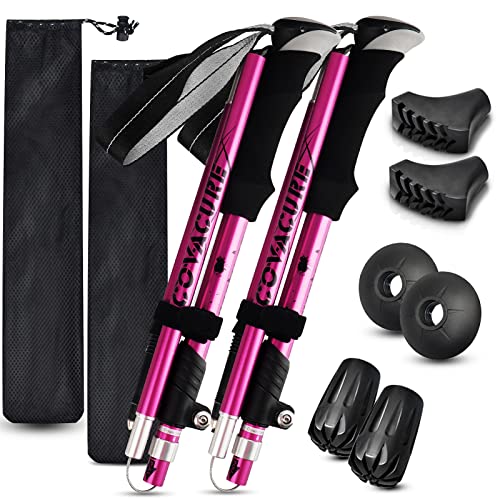
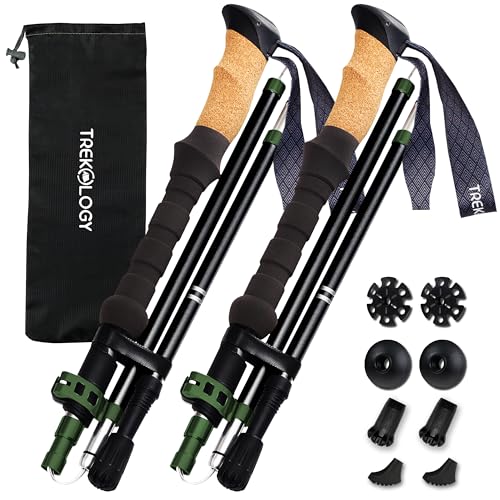
Grip material affects comfort and control. Cork grips are breathable, moisture-wicking, and mold to your hand over time. Foam grips are lightweight and comfortable in cool weather. Rubber grips are durable but can become slippery when wet. Adjustable wrist straps distribute weight and prevent drops. Interchangeable tips—carbide for rock, rubber for pavement—extend the life of your poles. Many folding poles also include snow baskets for snow travel or mud baskets for wet conditions.
How to Choose the Right Length
Proper length is critical for comfort and efficiency. When standing with the pole tip on the ground, your elbow should be at a 90-degree angle. Folding poles typically have a fixed upper section and an adjustable lower section, so you select a size range that matches your height:
- Under 5'0" — 100–105 cm
- 5'0"–5'4" — 105–110 cm
- 5'4"–5'8" — 110–115 cm
- 5'8"–6'0" — 115–120 cm
- Over 6'0" — 120–130 cm
For uphill sections, shorten the poles slightly; for downhill, lengthen them. This technique reduces strain and improves stability. If you're new to hiking, check out our essentials of hiking guide for more tips.
Maintenance and Care
To keep your folding trekking poles in top condition, follow these simple steps:
- Clean after each trip: Wipe down sections with a damp cloth to remove dirt and moisture.
- Dry thoroughly: Allow poles to dry fully before storing to prevent corrosion.
- Check the cord: Periodically inspect the tension cord for fraying. Replace if worn.
- Lubricate locks: Apply a small amount of silicone spray to locking mechanisms.
- Store correctly: Keep poles extended or loosely folded in a cool, dry place.
Proper care extends the life of your poles and ensures they perform when you need them most. For more outdoor gear maintenance tips, explore our camping gear section.
Safety and Trail Etiquette
Using trekking poles responsibly enhances everyone's experience. Keep these points in mind:
- Don't block the trail: When resting, lay poles parallel to the trail, not across it.
- Watch your swing: Be mindful of hikers behind you; don't let poles stick out unnecessarily.
- Respect wildlife: Avoid poking vegetation or disturbing animals. Learn more in our wildlife safety guide.
- Use rubber tips in sensitive areas: Protect fragile ecosystems and reduce noise.
Following Leave No Trace principles ensures our trails remain beautiful for generations.
Frequently Asked Questions
Are folding trekking poles as strong as telescopic poles?
Yes, modern folding trekking poles made from high-quality aluminum or carbon fiber are very strong. The internal tension cord system, when properly tensioned, creates a rigid structure that can handle significant weight and stress, making them suitable for most hiking and backpacking adventures.
What is the main advantage of folding trekking poles?
The primary advantage is their compact packed size. When folded, they are much shorter than telescopic poles, making them easy to store in a backpack, attach to a daypack, or pack for travel.
How do I choose the right length for my folding trekking poles?
When standing with the pole tip on the ground, your elbow should be at a 90-degree angle. Most folding poles have a fixed upper section and an adjustable lower section, so you choose a size range that fits your height.
Can I use folding trekking poles for winter hiking?
Absolutely. Many folding poles come with snow baskets, which prevent them from sinking into soft snow. Aluminum poles are often preferred in winter because they don't become brittle in cold temperatures. For more winter tips, see our winter camping gear guide.
Ready to Hit the Trail with Confidence?
Folding trekking poles are a smart investment for any outdoor enthusiast. Explore our recommended models below and find the perfect pair for your next adventure.
VIEW RECOMMENDED POLES