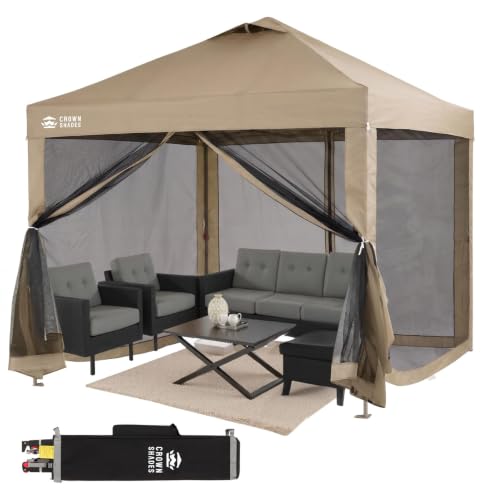
10x10 Pop Up Tent with Mosquito Net: The Complete Buyer's Guide
A 10x10 pop up tent with mosquito net combines instant setup, generous standing room, and reliable insect protection. This guide explains how these screen shelters work, what separates a good model from a poor one, and how to choose the right one for your campsite.
Why a 10x10 Pop Up Tent with Mosquito Net Belongs in Your Camping Kit
Few pieces of camping gear change the quality of a trip as much as a dedicated screen shelter. A 10x10 pop up tent with mosquito net gives you a bug-free zone for meals, card games, and relaxing evenings without retreating to your sleeping tent. The ten-by-ten footprint is the sweet spot for most campsites: large enough for a picnic table and several chairs, yet compact enough to fit on a standard tent pad.
Unlike traditional screen houses that require threading dozens of poles, a pop up design deploys in minutes. The frame is pre-assembled, and the canopy is permanently attached, so one person can usually raise the entire structure alone. That matters when you arrive at camp after dark or when the mosquitoes are already swarming. For campers who want to expand their shelter options further, exploring pop up gazebo with netting and curtains is a natural next step, since those models add privacy panels and larger coverage.
If you are still building out your base camp, this screen tent pairs well with the items covered in our things to buy for a new camper guide. Together, they form a comfortable, insect-free living area that makes longer trips far more enjoyable.
What Exactly Is a 10x10 Pop Up Tent with Mosquito Net?
A 10x10 pop up tent with mosquito net is a freestanding screen shelter measuring roughly ten feet by ten feet. The walls are made of fine mesh, often called no-see-um netting, which keeps out mosquitoes, flies, gnats, and other biting insects. The roof is typically a water-resistant coated fabric such as polyester or nylon with a polyurethane backing.
The frame uses a hub-and-strut or accordion-style mechanism. When you remove the shelter from its carry bag, the legs and roof struts unfold with minimal effort. Many models lock into place with a simple push or click. Takedown reverses the process just as quickly. This is a major advantage over cabin-style screen houses that can take fifteen minutes or more to assemble.
It is worth distinguishing this product from a mosquito netting for 10x10 pop up tent replacement or accessory kit. The replacement netting is just the mesh component, while the complete pop up tent includes the frame, roof, mesh walls, and carry bag. If you already own a canopy frame, a replacement netting set can be a budget-friendly way to convert it into a screen shelter.
Key Features to Evaluate Before You Buy
1. Mesh Quality and Mesh Size
Mesh is measured in holes per square inch. Standard mosquito netting is around 200 holes per square inch, which blocks most mosquitoes. No-see-um netting is denser, often 500 holes per square inch or more, and blocks tiny biting midges that pass through standard mesh. If you camp near lakes, marshes, or in the Northeast, no-see-um mesh is worth prioritizing. The trade-off is slightly reduced airflow and visibility, though the difference is minor in practice.
2. Roof Material and Water Resistance
The roof is your primary defense against rain and sun. Look for a canopy with a minimum of 500mm hydrostatic head for light rain, and 1000mm or more for sustained showers. A silver or reflective coating on the underside helps with heat rejection, which matters in direct summer sun. Some premium models use a full-coverage rainfly that extends beyond the mesh walls, creating a drip edge that keeps rain away from the seating area.
3. Frame Construction and Stability
Steel frames are heavier and more rigid, making them a good choice for car camping and windy exposed sites. Aluminum frames are lighter and resist rust, which suits campers who move frequently or camp in humid coastal areas. Fiberglass is the lightest option but can splinter over time. Whatever the material, check for reinforced joints, a hub system with metal rather than plastic connectors, and pre-attached guy lines with tensioners.
4. Setup Mechanism
There are two main pop up styles. The first is the true pop up, where the frame springs open as soon as you release the strap. This is the fastest option but can be awkward to fold back into the carry bag. The second is the pre-assembled folding frame, where the legs telescope and the roof struts click into place. This style is slightly slower but far easier to pack away. For solo campers, the folding frame is often the more practical choice.
5. Floor and Anchoring Options
Most 10x10 screen tents do not include a floor, which allows you to place them over a picnic table or on uneven ground. Some models offer an optional floor or a partial floor mat. Anchoring hardware matters just as much: sandbags, stakes, and guy lines should all be included or available. On concrete or wooden decks, you will need weighted base plates, so confirm the leg diameter matches common accessories.
Comparing Entry-Level, Mid-Range, and Premium Screen Tents
Rather than focusing on numbers, it helps to understand how these shelters are positioned in the market. The table below uses universal quality tiers so the guidance stays relevant over time.
| Feature | Entry-Level | Mid-Range | Premium |
|---|---|---|---|
| Frame material | Fiberglass or thin steel | Powder-coated steel or aluminum | Reinforced aluminum alloy |
| Mesh type | Standard mosquito mesh | Dense mosquito mesh with reinforced edges | No-see-um mesh throughout |
| Roof coating | Basic water resistance | PU-coated, taped seams | Full rainfly, UV-reflective underside |
| Setup time | 5 to 10 minutes | 3 to 6 minutes | 2 to 4 minutes |
| Wind resistance | Light breeze only | Moderate wind with guy lines | Strong wind with full anchoring system |
| Carry weight | Heavier, bulkier | Balanced | Lighter for the size |
| Best for | Occasional backyard or fair-weather camping | Regular weekend campers | Frequent campers and exposed sites |
Mid-range models usually offer the best balance of durability, weight, and setup convenience. Entry-level shelters work well for occasional use, while premium models justify their cost through better materials, tighter mesh, and stronger frames that hold up to repeated pitching.
Pros and Cons of a 10x10 Pop Up Screen Tent
Advantages
- Fast setup and takedown compared to pole-assembled screen houses
- Generous 10x10 footprint fits a picnic table and chairs
- Excellent ventilation for hot, humid climates
- Effective protection against mosquitoes and other flying insects
- Freestanding design works on grass, gravel, and decks
- Can be used as a dining area, game room, or gear staging zone
Limitations
- Mesh walls do not block wind-driven rain
- Lighter models can shift in strong gusts without proper staking
- Folding some pop up frames back into the bag takes practice
- No floor means ground moisture and drafts can enter
- Not a substitute for a four-season sleeping tent
- Larger packed size than a comparable backpacking tarp
For most campers, the advantages far outweigh the drawbacks, especially when the shelter is used as a daytime living space rather than a primary sleeping tent. If you plan to camp in heavy rain, combine the screen tent with a separate sleeping shelter and review our guide on camping in the rain in a tent to keep your sleeping area dry.
How to Choose the Right 10x10 Pop Up Tent with Mosquito Net
Match the Shelter to Your Camping Style
Car campers can prioritize durability and features over weight, since the shelter travels in the trunk. Backpackers and paddlers should look at lighter aluminum-frame models, though a true 10x10 screen tent is rarely a backpacking item due to its packed size. For base camp setups, weight is less important than wind resistance and mesh quality.
Consider Your Climate
In humid, bug-heavy regions, no-see-um mesh and high airflow are the top priorities. In dry, windy areas, frame strength and anchoring hardware matter more. If you camp in the Pacific Northwest or the Southeast, a model with a full rainfly will extend the shelter's usable season considerably. Campers who extend into colder months should also review our winter camping gear guide for insulation and heating considerations.
Check the Setup Mechanism in Person If Possible
Pop up mechanisms vary widely. Some open with a satisfying snap and fold back easily. Others require significant force to collapse and can pinch fingers. Reading owner reviews about the folding process is one of the most reliable ways to avoid frustration. If you cannot try before buying, prioritize models with a documented one-person setup and takedown.
Plan for Anchoring
Every 10x10 screen tent should be staked or weighted. On grass, use the included stakes and guy lines. On hard surfaces, bring sandbags or dedicated weight plates. Wind can lift a screen tent surprisingly quickly, and a tumbling shelter can damage the frame and nearby gear.
Setup, Takedown, and Long-Term Care
Setting Up Alone
- Clear the area of rocks, sticks, and debris that could puncture the roof or snag the mesh.
- Remove the shelter from its bag and lay it flat with the roof facing up.
- Unfold the legs outward until the frame begins to open.
- Lift the center hub or push the roof struts until they lock into place.
- Extend each leg to full height and engage the locking pins.
- Stake the corners and attach guy lines, tensioning them evenly.
Practice this sequence at home before your trip. A dry run in the backyard turns a ten-minute job into a three-minute job at camp, and it reveals any stiff joints or missing hardware before you are depending on the shelter.
Takedown and Packing
Takedown is the reverse of setup, but the key is to keep the mesh away from the frame joints as the shelter collapses. Fold the walls inward before lowering the roof, and never force a stuck strut. If the carry bag feels too small, check that the legs are fully retracted and that no fabric is trapped in the hinges.
Cleaning and Storage
Wipe the roof with a damp cloth and mild soap after each trip, then let it dry completely before storage. Mildew thrives on damp coated fabric, and once it sets in, it is difficult to remove. Store the shelter loosely in a dry, cool place rather than compressed in its bag for long periods. Inspect the mesh for tears before each season; small holes can be patched with adhesive mesh repair tape.
If you camp in dusty environments, rinse the mesh gently with a hose and allow it to air dry. Avoid harsh detergents, which can degrade the water-resistant coating on the roof.
Common Mistakes to Avoid
- Leaving the shelter unstaked. Even a light breeze can move a screen tent. Always anchor it.
- Setting up under dead branches. Falling limbs can tear the roof and damage the frame. Look up before you pitch.
- Ignoring the mesh size. Standard mesh stops mosquitoes but not no-see-ums. Match the mesh to your local insect pressure.
- Packing it wet. Damp fabric leads to mildew and a persistent odor. Dry the shelter fully before storage.
- Using it as a sleeping tent in cold weather. Mesh walls offer little insulation. Use a proper sleeping tent for cold nights and review our how to stay warm in winter tips.
- Skipping the rainfly. In wet climates, a full rainfly or a separate tarp over the shelter makes a significant difference.
Gear That Pairs Well with a 10x10 Screen Tent
A screen tent is the hub of a comfortable camp, but a few complementary items make it even better. A folding table and chairs turn the space into a dining room. A portable cooler keeps drinks and perishables cold. A camping lantern hung from the center hub provides even overhead light.
For sleeping arrangements, many campers use an air mattress inside a separate sleeping tent. Our guides on camping air beds with built-in pump and air mattress with built-in pump king cover the options in detail. If you prefer a hammock for lounging, a camping hammock with bug net and rainfly offers a bug-free alternative for afternoon naps.
Cooking near the screen tent is convenient, but keep open flames away from the mesh. Use a camp stove on a stable table outside the shelter, and review our campfire safety rules before your trip. For meal ideas that work well at camp, see our guides on easy things to cook over a fire and camping meals to make ahead of time.
Frequently Asked Questions
What is a 10x10 pop up tent with mosquito net?
It is a freestanding screen shelter measuring ten feet by ten feet. The walls are fine mesh that blocks insects while allowing airflow, and the roof is a water-resistant canopy. The frame pops up or unfolds quickly without complex pole assembly.
Can a 10x10 pop up tent with mosquito net be used in the rain?
Most models handle light to moderate rain thanks to a water-resistant roof. However, mesh walls are not waterproof, so wind-driven rain can enter from the sides. Many campers add side panels or a larger tarp for full weather protection.
How many people fit in a 10x10 pop up screen tent?
It comfortably seats four to six people around a picnic table. As a sleeping shelter with cots or air mattresses, it fits two to three adults. For standing room and social gatherings, it works well for small groups.
Do I need to stake down a pop up screen tent?
Yes. These tents are lightweight and can be lifted by wind. Always use the included guy lines and stakes. On hard surfaces, use sandbags or weighted base plates.
What is the difference between a screen tent and a regular camping tent?
A screen tent is designed for daytime use, dining, and insect protection with mesh walls and no floor. A regular camping tent has solid walls, a floor, and is built for sleeping and weather protection. Many campers use both together.
Is a 10x10 screen tent big enough for a family?
For dining and hanging out, yes. A family of four can sit comfortably around a table with room to move. For sleeping, a 10x10 screen tent is generally too open and drafty; a dedicated family sleeping tent is a better choice.
Final Thoughts
A 10x10 pop up tent with mosquito net is one of the most practical additions to a car camping setup. It creates a bug-free living space that makes meals, games, and evenings outdoors far more enjoyable. Focus on mesh quality, roof water resistance, frame stability, and setup convenience, and choose a tier that matches how often you camp and the conditions you expect.
If you are still assembling your kit, our things to take when you go camping checklist and first time camping tips will help you cover the essentials. With the right shelter and a bit of preparation, your camp becomes a comfortable base for every adventure.