Best Trekking Poles Guide 2026
Discover the best trekking poles to enhance your hiking and backpacking experience. Our expert guide reviews top models from LEKI, Black Diamond, and more.
View Top RecommendationsTrekking poles are essential gear for any serious hiker. They provide stability, reduce impact on your knees, and improve your overall hiking efficiency. Whether you're planning a day hike or a multi-day backpacking trip, choosing the right pair is crucial for safety and enjoyment.
Why Use Trekking Poles?
Protect Your Knees
A well-known 1999 study from the Journal of Sports Medicine showed that using trekking poles can reduce knee strain by over 25%[citation:15]. By transferring some weight from your legs to your upper body, poles help absorb shock, especially during steep descents[citation:2][citation:12]. This makes them a great investment for maintaining joint health.
Increase Stability and Safety
Poles provide two extra points of contact with the ground, significantly enhancing your stability on uneven terrain, crossing streams, or navigating tricky obstacles[citation:2][citation:15]. They act like a probe to check water depth or snow bridges, and can even be used to appear larger in a wildlife encounter[citation:15].
Boost Your Efficiency
Using your poles to push off with each step engages your upper body, making your hike more efficient[citation:12][citation:15]. They help you maintain a consistent rhythm and feel less fatigued at the end of a long day. This is similar to the motion used in Nordic walking, helping to propel you forward.
Versatility Around Camp
Beyond the trail, trekking poles are incredibly useful. Many ultralight backpackers rely on them to set up their ultralight backpacking shelters[citation:15]. They are also handy for pushing aside brush or serving as a makeshift clothesline.
How to Choose the Right Trekking Poles
With so many options on the market, selecting the best trekking poles can feel overwhelming. Here is a breakdown of the key features to consider to find the perfect pair for your needs.
Shaft Material: Aluminum vs. Carbon
Aluminum poles are a classic choice. They are durable, affordable, and have a slight flexibility that makes them less likely to snap under pressure. If you ever overload them, they are more likely to bend than break, which is a great safety feature[citation:14][citation:10]. They are a reliable choice for most hikers and backpackers, especially those with heavier packs.
Carbon fiber poles are lighter and stiffer, making them a favorite for ultralight backpackers and trail runners who prioritize weight savings[citation:4][citation:6][citation:10]. However, they can be more expensive and are more prone to shattering if subjected to extreme lateral stress. They are best suited for well-maintained trails and lighter loads.
Pole Design: Fixed vs. Adjustable
Adjustable (telescoping) poles are the most common and versatile. They allow you to change the length on the fly to suit the terrain: shorter for uphill sections and longer for descents[citation:1][citation:2][citation:14]. They are also a great choice if multiple people will be sharing the poles, or if you want to use them with a camping tarp shelter.
Fixed-length poles offer less fine-tuning but are generally lighter and more durable because they have fewer moving parts. They are a popular choice for trail runners and fastpackers who prioritize a streamlined, lightweight setup[citation:1]. Many fixed-length poles are foldable (Z-style) for easy packing.
Grip Material: Cork, Foam, or Rubber
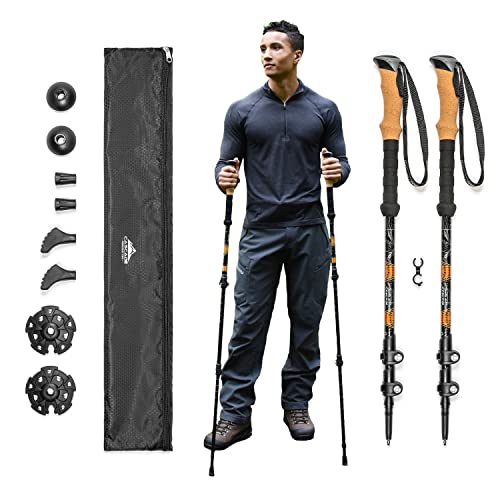
- Cork: Highly recommended for its comfort. Cork grips conform to your hand over time, wick moisture well, and provide excellent shock absorption[citation:1][citation:9]. They are a premium choice for long hikes.
- Foam (EVA): Soft, lightweight, and comfortable. Foam grips are good at absorbing sweat and provide a tacky feel, which is great in wet conditions[citation:1][citation:10].
- Rubber: Durable and provides a secure grip. However, they don't breathe as well as cork or foam and can become slippery when wet[citation:10]. They are often found on budget or entry-level poles.
Locking Mechanisms
The locking system keeps your poles at the correct length. External lever locks are generally preferred for their reliability and ease of use, even with cold or wet hands[citation:9][citation:14]. Twist locks are a more traditional system that can be simpler but may require more maintenance and can be prone to slipping[citation:1][citation:9]. For most users, a lever lock is a better bet.
Women’s-Specific Options
Women's trekking poles are designed with shorter maximum lengths and smaller grip diameters to better fit smaller hands[citation:1][citation:6]. This makes them more comfortable for many female hikers. However, anyone who prefers a smaller grip and shorter pole can benefit from this design, regardless of gender[citation:6].
Environmental Considerations
While trekking poles offer many benefits, their carbide tips can scar rocks and contribute to trail erosion[citation:2][citation:10]. To reduce your impact, consider using rubber tips when hiking on sensitive or rocky terrain, and make sure to keep your poles on the established trail surface[citation:2].
Top Trekking Pole Picks of 2026
Best Premium Overall
LEKI Black Series FX Carbon
Exceptional for their comfort, durability, and lightweight performance. They feature ergonomic cork grips and a compact foldable design[citation:9].
Price: $250
Best Lightweight
Gossamer Gear LT5
Incredibly lightweight at 4.9 oz per pole, perfect for ultralight enthusiasts. They offer great performance without the bulk[citation:1][citation:9].
Price: $195
Best Value
REI Co-op Trailmade
A fantastic budget-friendly option that doesn't skimp on quality. They are durable, comfortable, and easy to adjust, making them perfect for beginners and day hikers[citation:14].
Price: $80
Best for Day Hiking
LEKI Legacy Lite
Lightweight, comfortable, and with a secure lever lock. Their aluminum shafts offer a great balance of durability and weight[citation:14].
Price: $120
Best Budget Foldable
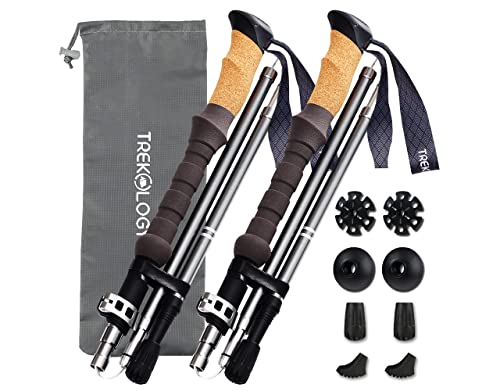
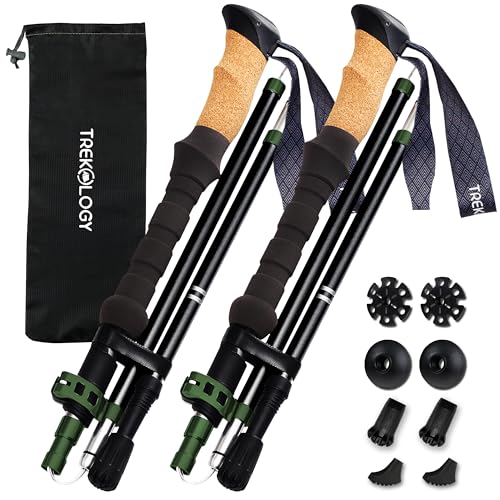
Trekology Trek-Z 2.0
Fold down to just 15 inches, making them incredibly packable. A great entry-level choice for hikers who want a modern foldable pole at an affordable price[citation:6][citation:9].
Price: $40
Ready to choose your new trekking poles? Browse our selection of recommended gear below to find the perfect pair for your next adventure.