
Trailer Hitch for Camper: The Ultimate Buying Guide
Choose the right hitch for safe, confident towing. Learn about weight ratings, hitch classes, installation tips, and find the best hitches for your camper.
Shop Top HitchesWhy the Right Hitch Matters: Your trailer hitch is the critical link between your vehicle and camper. Choosing the wrong hitch can compromise safety, damage your vehicle, or even cause accidents. This guide covers everything you need to make an informed decision.
Understanding Hitch Classes & Weight Ratings
Trailer hitches are categorized by class based on their towing capacity. Selecting the right class ensures your vehicle can safely tow your camper's weight. Here's a quick breakdown:
| Hitch Class | Max Tongue Weight | Max Towing Capacity | Best For |
|---|---|---|---|
| Class I | 200 lbs | 2,000 lbs | Small trailers, bike racks |
| Class II | 350 lbs | 3,500 lbs | Small campers, pop-ups |
| Class III | 500–600 lbs | 5,000–6,000 lbs | Mid-size campers, travel trailers |
| Class IV | 1,000–1,200 lbs | 10,000–12,000 lbs | Large travel trailers, fifth wheels |
| Class V | 1,200–2,000 lbs | 12,000–20,000 lbs | Heavy-duty RVs, oversized campers |
For most campers, a Class III or IV hitch is the sweet spot. Always check your vehicle's towing capacity and your camper's gross vehicle weight rating (GVWR) before purchasing. If you're unsure, consult your vehicle's manual or a professional installer.
Weight Distribution vs. Standard Hitches
While a standard hitch (also called a receiver hitch) is sufficient for smaller campers, larger travel trailers often benefit from a weight distribution hitch (WDH). A WDH uses spring bars to distribute tongue weight more evenly across your vehicle's axles, improving stability, braking, and steering control. It also reduces trailer sway and prevents rear-end sag.
If your camper weighs more than 5,000 lbs or has a tongue weight over 500 lbs, a weight distribution hitch is highly recommended. Some vehicles even require a WDH for safe towing. For smaller campers under 3,500 lbs, a standard Class II or III hitch is usually adequate.
Installation & Compatibility Considerations
Before buying, confirm that the hitch is compatible with your vehicle's make, model, and year. Most hitches are vehicle-specific and require a custom fit. Installation can be DIY for many Class I–III hitches, but Class IV and V often require professional installation due to their complexity and safety-critical nature.
Also consider the hitch's receiver size—most use a 2-inch receiver, but some smaller hitches use 1.25 inches. Ensure your ball mount and accessories match the receiver size. For campers with integrated sway control or anti-sway bars, check that your chosen hitch supports these features.
Key Features to Look For
📐 Weight Capacity
Always choose a hitch rated for at least 10–15% more than your camper's GVWR to account for cargo and safety margins.
🔄 Sway Control
Integrated sway control or compatible anti-sway bars reduce trailer sway, especially in crosswinds or when passing large trucks.
🔧 Adjustable Shank
An adjustable shank lets you level your trailer, preventing sag and ensuring proper weight distribution for a smooth, safe ride.
🛡️ Corrosion Resistance
Look for powder-coated or stainless steel hitches to withstand moisture, road salt, and harsh weather, extending the hitch's lifespan.
Safety & Maintenance Tips
- Inspect Regularly: Check for rust, cracks, or loose bolts before each trip. Tighten all fasteners to manufacturer specifications.
- Grease Moving Parts: Apply a thin layer of grease to the ball mount and hitch ball to reduce wear and prevent seizing.
- Check Torque: Re-torque hitch bolts after the first 50–100 miles of towing, as they can loosen with initial use.
- Use Safety Chains: Always cross safety chains under the trailer tongue to catch the trailer if it disconnects.
- Lubricate the Receiver: A light coat of anti-seize lubricant on the receiver tube prevents rust and makes insertion/removal easier.
Which Hitch Is Right for Your Camper?
Here's a quick decision guide based on camper type:
- Pop-up campers & teardrops (under 3,000 lbs): Class II or III standard hitch works well.
- Small travel trailers (3,000–5,000 lbs): Class III hitch with a weight distribution system recommended.
- Mid-size travel trailers (5,000–8,000 lbs): Class IV hitch with a weight distribution and sway control system.
- Large travel trailers & fifth wheels (8,000+ lbs): Class IV or V hitch, professional installation strongly advised.
Still unsure? Check your vehicle's owner manual or consult a certified towing professional. Investing in the right hitch is investing in your family's safety.
Frequently Asked Questions
Can I install a trailer hitch myself?
Yes, for many Class I–III hitches, DIY installation is possible with basic tools and a few hours of time. However, Class IV and V hitches often require welding or drilling, so professional installation is safer. Always follow the manufacturer's instructions.
What's the difference between a weight distribution hitch and a sway control hitch?
A weight distribution hitch (WDH) redistributes tongue weight across all axles, improving handling. Sway control (often integrated with WDH) actively dampens trailer sway. Many modern hitches combine both functions for maximum stability.
Do I need a special hitch for a camper with a lithium battery or solar panels?
No, the hitch itself doesn't need to be modified for electrical components. However, ensure your vehicle's electrical system (7-pin connector) is rated for the camper's power needs, especially if you have a lithium battery or solar charging system.
How much does a good trailer hitch cost?
Prices vary widely: a Class II hitch can cost around $150–$300, while a high-quality Class IV weight distribution hitch with sway control can range from $400–$900 or more, depending on brand and features. Professional installation adds $100–$300.
Top-Rated Trailer Hitches for Campers
⚠️ AFFILIATE DISCLOSURE: This website contains affiliate links. As an Amazon Associate, we earn from qualifying purchases. If you make a purchase through these links, we may receive a small commission at no additional cost to you. Read our full affiliate policy.

TOPTOW RV Bumper Hitch Receiver for 4in to 4.5in Beams, 2in Receiver | Fits for Bike Racks, Cargo Carriers Camper-on

Fastway Connect™ Weight Distribution Hitch

CURT 17063 Round Bar Weight Distribution Hitch with Sway Control, 14,000 lb

Ohuhu RV Bumper Hitch 2" Receiver Adapter with Hitch Pin and Hitch Cover
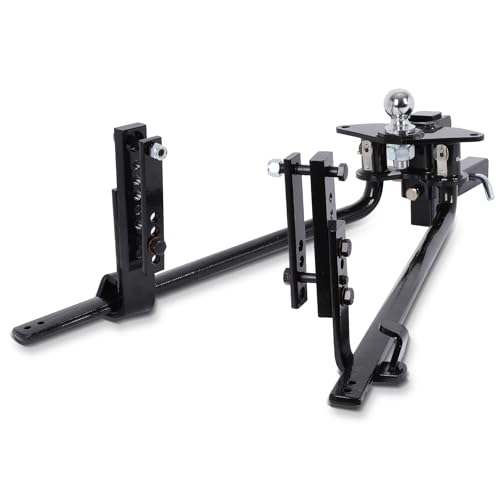
Weight Distribution Hitch, Heavy Duty Travel Trailer Towing Hitch Bar Kit
