
Complete Tire Pressure Monitoring System (TPMS) Guide
Discover how a TPMS works, the different types available, and why it's essential for your vehicle's safety, fuel efficiency, and tire longevity.
Why TPMS Matters: Under-inflated tires are a leading cause of accidents, increased fuel consumption, and premature tire wear. A Tire Pressure Monitoring System (TPMS) is your first line of defense, providing real-time alerts to keep you safe and save you money.
What is a Tire Pressure Monitoring System (TPMS)?
A Tire Pressure Monitoring System (TPMS) is an electronic system designed to monitor the air pressure inside your vehicle's tires. It alerts you when tire pressure drops significantly below the recommended level, helping you avoid accidents, improve fuel economy, and extend tire life. Since 2007, TPMS has been mandatory in the USA for all new passenger vehicles [citation:6].
Types of TPMS: Direct vs. Indirect
There are two primary types of TPMS, each with its own method of monitoring tire pressure:
Direct TPMS
Uses physical pressure sensors mounted inside each tire or on the valve stem to measure pressure and temperature in real-time. It provides highly accurate, individual tire pressure readings directly to your dashboard [citation:6][citation:13].
Pros: Highly accurate, provides real-time data, can detect slow leaks.
Cons: More expensive, sensors have batteries that need replacement (5-7 years) [citation:6].
Indirect TPMS
Does not use physical pressure sensors. Instead, it uses the vehicle's Anti-lock Braking System (ABS) wheel speed sensors to measure the rotational speed of each wheel. Under-inflated tires have a smaller diameter and rotate faster, which triggers an alert [citation:6][citation:12].
Pros: More affordable, requires no sensor battery replacement.
Cons: Less accurate, doesn't provide pressure readings, can be affected by tire wear and road conditions.
Quick Comparison: Direct vs. Indirect TPMS
| Feature | Direct TPMS | Indirect TPMS |
|---|---|---|
| Accuracy | High (exact PSI readings) | Low (estimated) |
| Real-Time Data | Yes | No |
| Maintenance | Sensor battery replacement | No sensor maintenance |
| Cost | Higher | Lower |
Why You Need a TPMS: Key Benefits
Investing in a quality Tire Pressure Monitoring System offers several significant advantages for every driver:
- Enhanced Safety: The primary benefit is safety. TPMS alerts you to dangerous pressure drops, reducing the risk of blowouts and accidents [citation:7][citation:13].
- Improved Fuel Efficiency: Under-inflated tires increase rolling resistance, which forces your engine to work harder and consume more fuel. Properly inflated tires can improve fuel economy by up to 3% [citation:7].
- Extended Tire Life: Maintaining correct tire pressure ensures even tread wear, prolonging the life of your tires and saving you money on replacements [citation:6].
- Environmental Benefits: Better fuel efficiency means fewer CO2 emissions, making TPMS an eco-friendly choice [citation:13].
Buyer's Guide: Choosing the Best TPMS
When selecting a TPMS for your vehicle, consider the following factors to make an informed purchase:
- Type: Decide between a direct or indirect system. Direct systems are more accurate and recommended for most drivers, especially if you frequently travel long distances or carry heavy loads.
- Installation: Some systems require professional installation (direct TPMS with in-tire sensors), while others are easy to install yourself (external sensors that screw onto the valve stem).
- Display: Look for a system with a clear, easy-to-read display. Many modern systems connect to a smartphone app via Bluetooth, providing detailed data and alerts [citation:1].
- Price: Prices range from under $50 for basic aftermarket kits to over $200 for premium systems with advanced features. Always prioritize quality and reliability [citation:1][citation:8].
- Compatibility: Ensure the TPMS is compatible with your vehicle's make and model, and check if it works with your tires (especially if you use run-flat or larger tires).
Top Recommended TPMS & Tire Safety Gear
⚠️ AFFILIATE DISCLOSURE: This website contains affiliate links. As an Amazon Associate, we earn from qualifying purchases. If you make a purchase through these links, we may receive a small commission at no additional cost to you. Read our full affiliate policy.

Tymate TM7 RV Tire Pressure Monitoring System, TPMS Set of 4 Sensors | Max. 5 Tires Info Monitoring, Wireless, 6 Alarm Modes, 0-144 PSI, Big Color LCD, Ideal for RV/Truck/SUV/Sedan/Older Vehicles

Tymate TM2 RV Tire Pressure Monitoring System, TPMS Set of 4 Sensors | Max. 10 Tires Info Monitoring, 6 Alarm Modes, 0-144PSI, Solar/USB Charge, Color LCD, For RV/Fifth Wheel/Trailer/Truck/SUV/Car

Avutrel Tire Pressure Monitoring System,TPMS with Solar Charging&USB Charging,5Alarm Modes, Real Time Monitoring Pressure and Temperature, Auto& Color Display Screens,Suitable for 4 Wheeled Vehicles

RV Tire Pressure Monitoring System, TPMS Set of 6 Sensors, 0-144PSI | 6 Alarm Modes, Adjustable PSI, Solar/USB Charge, Color LCD, RV, Trailer, Camper, Motorhome, Dually Truck, Tow Vehicle

2026 New RV Tire Pressure Monitoring System (TPMS) with 4 Sensors, 6 Alarm Modes, Solar & USB Dual Charging, Color LCD Display, 0-88 PSI for Truck SUV MPV Sedan Trailer Fifth Wheel (Black)

Tymate TM12 RV Tire Pressure Monitoring System, TPMS Set of 6 Sensors

Masoll M13 Tire Pressure Monitoring System, RV/Trailer TPMS with 4 Sensors | Solar Charging, Auto Calibration, LCD Display, 0-99PSI, for RV/Trailer/Truck/SUV/Sedan
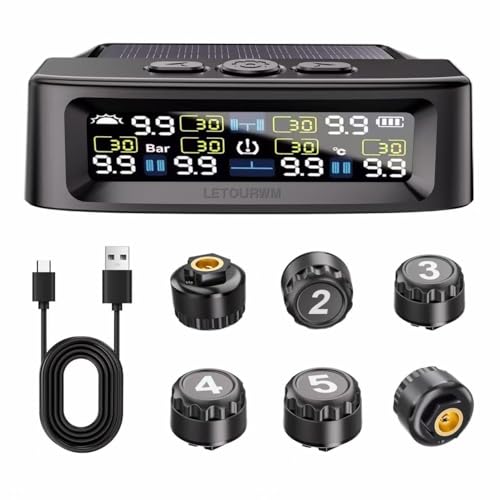
RV Tire Pressure Monitoring System -TPMS Tire Pressure Monitor with 6 Sensors,M12-3 TPMS Solar Charge & USB Color LCD Display, 0-9.9BAR/144PSI Range, 6 Alarm Modes for RV/Trailer/Truck IP67
Keep Your Vehicle in Top Condition
Your tires are just one part of a safe and reliable vehicle. Explore our other guides to ensure you're fully prepared for any journey.
- Check out our Tire Repair Kit guide to be prepared for punctures on the road.
- Learn about essential RV Maintenance Kits to keep your home-on-wheels in peak condition.
- For suspension-related issues, read our guide on Suspension Upgrades.
- Don't forget about Tie-Downs and Suspension for safely hauling heavy loads.