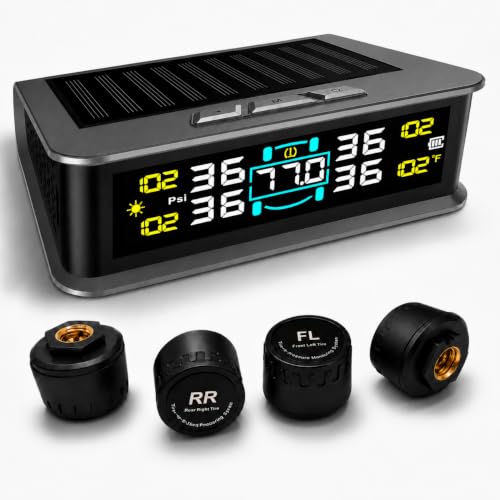
Tire Pressure Monitor System: Complete Guide & Best Picks
Enhance safety, save fuel, and extend tire life with the right TPMS. Compare internal & external sensors, understand alerts, and choose the best system for your car, RV, or trailer.
Why TPMS matters: Proper tire pressure reduces blowout risk, improves fuel economy by up to 3%, and extends tire tread life. A tire pressure monitor system gives you real-time data so you can act before a flat becomes a danger.
What Is a Tire Pressure Monitor System (TPMS)?
A tire pressure monitor system (TPMS) is an electronic system that tracks the air pressure inside your tires and alerts you when pressure drops below a safe threshold. Modern vehicles often come with factory-installed TPMS, but aftermarket systems offer more features, such as real-time readouts, temperature monitoring, and multi-vehicle support.
If you're towing a teardrop trailer or driving a slide-in truck camper, adding a TPMS to your trailer is highly recommended. It helps you avoid catastrophic blowouts that can damage your rig and endanger others.
Types of TPMS: Direct vs. Indirect
Direct TPMS
Uses physical pressure sensors mounted inside each tire (or on the valve stem). Transmits real-time pressure and temperature data to a display unit. More accurate and reliable.
- Accuracy: ±1 PSI
- Installation: Professional or DIY (external sensors)
- Best for: RVs, trailers, off-road, and drivers who want precise readings
Indirect TPMS
Uses wheel speed sensors to estimate pressure changes. Less accurate, prone to false alerts, and doesn't display actual PSI. Often factory-installed in many passenger cars.
- Accuracy: Estimates (no PSI readout)
- Installation: Factory-only (not aftermarket)
- Best for: Daily commuting when you just need a warning light
Why You Need a Tire Pressure Monitor System
🔒 Safety First
Prevent blowouts, especially at high speeds or when towing. A TPMS gives you early warning so you can pull over safely.
⛽ Fuel Economy
Under-inflated tires increase rolling resistance. Proper inflation can save you up to 3% on fuel.
🛞 Tire Longevity
Maintain even tread wear. Tires last longer when kept at the recommended PSI.
🧊 Temperature Monitoring
Many systems also track tire temperature—critical for heavy loads or desert driving.
TPMS Comparison: Internal vs. External Sensors
| Feature | Internal (In-Tire) Sensors | External (Valve Stem) Sensors |
|---|---|---|
| Installation | Professional (tire dismount) | DIY (screw on valve stem) |
| Accuracy | ±1 PSI | ±1–2 PSI |
| Battery Life | 5–8 years | 1–2 years (replaceable) |
| Security | Inside tire, tamper-proof | Can be stolen or damaged off-road |
| Price Range | $150–$350+ | $50–$200 |
| Best For | RVs, off-road, commercial | Daily drivers, budget-conscious |
How to Choose the Best Tire Pressure Monitor System
- Vehicle Type: For slide-in truck campers or RVs, choose a system with 6–12 sensors and a long-range display. For passenger cars, a 4-sensor system is enough.
- Display Type: Prefer a color LCD that shows PSI, temperature, and battery status. Some systems connect to your smartphone via Bluetooth.
- Sensor Type: External sensors are easier to install, but internal sensors are more accurate and secure—especially for off-road use.
- Alerts: Look for both visual and audible alerts for pressure loss, high temperature, and fast leaks.
- Battery Life: For external sensors, replaceable CR1632 batteries are convenient. Internal sensors have non-replaceable batteries that last 5+ years.
- Range: For RVs with trailers, ensure the display can receive signals from the farthest tire—usually up to 100 feet.
Need to know more about tire repair kits or RV parking safety? We have guides for that too.
Installation & Maintenance Tips
🔧 External Sensor Installation
1. Replace the valve stem cap with the sensor.
2. Use a small wrench to tighten the lock nut.
3. Pair sensors with the display unit per the manual.
✅ 10-minute job, no special tools.
🛠️ Internal Sensor Installation
1. Have a tire shop mount the sensors on the rim.
2. Balance the tires after installation.
3. Program the sensor IDs into your display.
⏱️ Professional installation recommended.
Pro Tip: Recalibrate your TPMS after rotating tires or changing tire sizes. Most systems have a reset or learning mode.
Frequently Asked Questions
Q: Is TPMS required by law?
Yes, all vehicles manufactured after 2007 in the US must have a TPMS warning light. Aftermarket systems are optional but highly recommended for added safety.
Q: Can I install a TPMS on a trailer?
Absolutely. Many systems support up to 12 sensors, so you can monitor your tow vehicle and trailer. Teardrop trailers and truck campers benefit greatly from this.
Q: How often should I check my TPMS batteries?
External sensor batteries last 1–2 years. Internal sensors last 5–8 years. Replace batteries when the display shows low battery warnings.
Ready to choose your TPMS? Browse our recommended tire pressure monitors below. Each product is selected based on customer reviews, durability, and value. Save money, stay safe, and enjoy peace of mind on every trip.