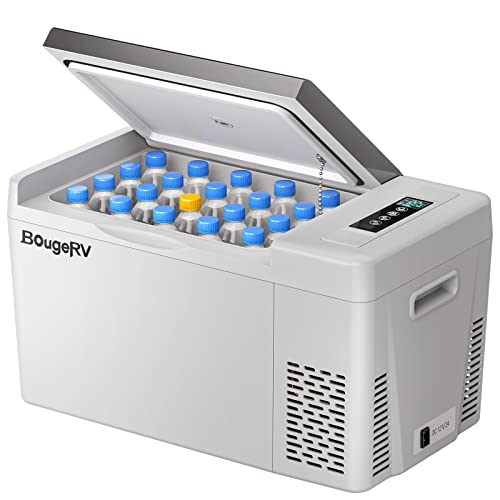
Portable Fridge Guide: Best 12V Coolers for Camping & RV
Discover how a portable fridge transforms your camping, RV, and off-grid adventures. Compare compressor coolers, dual-zone models, and power options to find the perfect cooling solution for your needs.
START EXPLORINGWhy a Portable Fridge Is a Game-Changer for Campers
Traditional coolers rely on ice, which means soggy food, limited cooling duration, and constant trips to restock. A portable fridge changes everything. Using a compressor-driven cooling system, these devices maintain precise temperatures for days or even weeks without ice. Whether you are planning a weekend tent camping trip, a cross-country RV camping adventure, or an overlanding expedition, a portable fridge keeps your food fresh and your drinks cold.
Unlike traditional coolers, portable fridges can also function as freezers, making them ideal for extended trips where you need to store meat, dairy, and other perishables. They are designed to run on 12V DC power from your car, RV, or a portable power station, giving you flexibility no matter where your travels take you.
A portable fridge is not just a luxury—it is a practical investment for anyone who spends extended time outdoors. It eliminates the need for ice, reduces food waste, and gives you the freedom to camp longer and farther from civilization.
How Portable Fridges Work: Compressor vs. Thermoelectric
Understanding the technology behind portable fridges helps you choose the right model for your needs. There are two main types: compressor-based and thermoelectric.
Compressor Portable Fridges
Compressor fridges work like your home refrigerator. They use a refrigerant and a compressor to actively cool the interior. This technology allows them to reach freezing temperatures, maintain consistent temperatures regardless of ambient conditions, and operate efficiently. They are the preferred choice for serious campers and overlanders.
- Pros: Can freeze food, precise temperature control, efficient in hot climates, durable.
- Cons: Higher upfront cost, slightly heavier, may require a larger power source.
Thermoelectric Portable Fridges
Thermoelectric fridges use the Peltier effect to transfer heat away from the interior. They are lighter, more affordable, and have fewer moving parts. However, they can only cool to about 40°F below ambient temperature, cannot freeze food, and struggle in hot weather.
- Pros: Lightweight, affordable, no compressor noise.
- Cons: Limited cooling capacity, cannot freeze, inefficient in high heat.
| Feature | Compressor Fridge | Thermoelectric Fridge |
|---|---|---|
| Cooling Capacity | Can freeze (down to 0°F or lower) | Cooling only (40°F below ambient) |
| Temperature Control | Precise, digital thermostat | Limited, manual adjustment |
| Efficiency in Heat | Excellent | Poor |
| Weight | Moderate to heavy | Lightweight |
| Power Consumption | Moderate (cycles on/off) | Constant draw |
| Best For | Extended trips, overlanding, RVing | Short trips, car camping, budget buyers |
For most campers who want reliable cooling for more than a day, a compressor fridge is the better choice. If you are on a tight budget or only need to keep drinks cool for a short drive, a thermoelectric model may suffice.
Key Features to Consider When Buying a Portable Fridge
Not all portable fridges are created equal. Here are the most important factors to evaluate before making a purchase.
1. Capacity and Size
Portable fridges range from compact 10-quart models for solo travelers to large 75-quart units for families. Consider how many people you are feeding, how long your trips typically last, and how much space you have in your vehicle. A good rule of thumb:
- 10–20 quarts: Solo weekend trips, day use.
- 20–40 quarts: Couples, short trips, compact vehicles.
- 40–60 quarts: Families, extended trips, truck bed campers.
- 60+ quarts: Large groups, long expeditions, RV camping.
2. Power Source and Consumption
Most portable fridges run on 12V DC power, which is standard in cars and RVs. Some models also support 24V DC or 110V AC with an adapter. Power consumption varies widely. Mid-range and premium models often feature energy-saving modes that reduce draw, making them compatible with portable power stations and solar chargers.
If you plan to run your fridge without a running engine, you will need a portable power station or a dual-battery setup. For solar enthusiasts, pairing a fridge with a solar charger creates a sustainable off-grid cooling system.
3. Single-Zone vs. Dual-Zone
Single-zone fridges have one compartment and one temperature setting. Dual-zone fridges have two independently controlled compartments, allowing you to use one as a fridge and the other as a freezer. Dual-zone models are ideal for extended trips where you want both fresh and frozen food.
4. Insulation and Build Quality
Good insulation keeps the cold in and the heat out, reducing the compressor's workload and saving power. Look for models with thick, high-density foam insulation and sturdy construction. Premium and luxury models often feature reinforced handles, heavy-duty lids, and weather-resistant exteriors.
5. Additional Features
- Digital temperature display: Allows precise control and monitoring.
- Battery protection: Prevents your car battery from draining completely.
- USB ports: Convenient for charging small devices.
- Interior LED lights: Makes finding items in the dark easier.
- App connectivity: Some high-end models offer Bluetooth or Wi-Fi control.
Portable Fridge Tiers: Entry-Level to Luxury
Portable fridges are available in a range of quality tiers. Understanding these tiers helps you set realistic expectations and choose a model that matches your needs and usage frequency.
| Tier | Best For | Typical Features | Durability |
|---|---|---|---|
| Entry-Level | Occasional weekend trips, budget-conscious buyers | Basic cooling, single-zone, manual controls, limited insulation | Moderate |
| Mid-Range | Regular campers, couples, small families | Digital thermostat, better insulation, battery protection, energy-saving modes | Good |
| Premium | Frequent travelers, overlanders, RVers | Dual-zone, app control, rugged construction, high-efficiency compressors | Excellent |
| Luxury | Full-time nomads, expedition vehicles, luxury RVs | Large capacity, dual-zone, premium insulation, advanced connectivity, heavy-duty hardware | Exceptional |
Entry-level models are suitable for occasional use and short trips. Mid-range models offer the best balance of features and reliability for most campers. Premium and luxury models are built for frequent use and harsh conditions, with advanced features and superior durability.
Powering Your Portable Fridge: Batteries, Solar, and More
One of the biggest concerns for new portable fridge owners is power. Here is how to keep your fridge running without draining your car battery.
Car Battery (12V DC)
Most portable fridges come with a 12V DC power cable that plugs into your car's accessory outlet. This works well while driving, but running the fridge with the engine off can drain your battery. Most fridges have a low-voltage protection feature that shuts off the fridge before the battery is fully depleted, but it is still risky for extended periods.
Portable Power Stations
A portable power station is the most popular solution for off-grid fridge operation. These battery packs can run a portable fridge for 10 to 48 hours or more, depending on capacity and fridge efficiency. They can be recharged from your car, solar panels, or a wall outlet.
Solar Panels
For extended off-grid trips, pairing your power station with a solar charger allows you to keep your fridge running indefinitely. A 100W to 200W solar panel is usually sufficient to maintain a mid-range portable fridge in sunny conditions.
Dual Battery Systems
Many overlanders and RVers install a dual battery system, which uses a separate battery for accessories like fridges. This isolates the starter battery and prevents accidental drain. If you are considering this setup, review our battery and solar panel guide for more details.
To maximize runtime, pre-cool your fridge at home using a wall outlet before your trip. Fill it with already-cold items, and keep it out of direct sunlight. These simple steps can significantly reduce power consumption.
Portable Fridge vs. Traditional Cooler: Which Is Right for You?
Traditional coolers have their place, but for many campers, a portable fridge is a superior investment. Here is a quick comparison:
| Aspect | Portable Fridge | Traditional Cooler |
|---|---|---|
| Cooling Method | Compressor or thermoelectric | Ice |
| Temperature Control | Precise, adjustable | Depends on ice, variable |
| Duration | Indefinite (with power) | 1–3 days (depending on ice) |
| Food Safety | Excellent | Risk of spoilage as ice melts |
| Convenience | No ice needed, set and forget | Requires ice replenishment, draining |
| Upfront Cost | Higher | Lower |
| Long-Term Value | Excellent for frequent campers | Good for occasional use |
If you camp frequently or take extended trips, a portable fridge will save you money on ice, reduce food waste, and provide peace of mind. If you only camp once or twice a year for short periods, a high-quality cooler may be sufficient.
Pros and Cons of Portable Fridges
✅ Pros
- No ice required, eliminating soggy food and water mess
- Precise temperature control for food safety
- Can freeze food and make ice
- Works in hot climates where coolers struggle
- Long-term cost savings on ice
- Ideal for extended trips and off-grid camping
- Many models are energy-efficient and solar-compatible
❌ Cons
- Higher upfront cost than traditional coolers
- Requires a power source (12V, power station, or solar)
- Heavier than most coolers
- Compressor models can be noisy (though typically quiet)
- Requires planning for power management on long trips
Maintenance and Care Tips for Your Portable Fridge
To keep your portable fridge running efficiently for years, follow these simple maintenance practices:
- Clean regularly: Wipe the interior with a mild detergent and water. Avoid abrasive cleaners.
- Keep vents clear: Ensure the ventilation grilles are not blocked. Good airflow is essential for efficient cooling.
- Check seals: Inspect the lid gasket for wear and tear. A damaged seal lets cold air escape and wastes power.
- Store properly: When not in use, clean and dry the fridge thoroughly. Store it with the lid slightly open to prevent mold and odors.
- Manage power: Use a portable power station or dual battery system to avoid draining your vehicle's starter battery.
- Pre-cool before trips: Plug your fridge into a wall outlet at home to pre-cool it before loading it into your vehicle.
For winter camping, be mindful that extreme cold can affect battery performance. If you are camping in freezing temperatures, review our winter camping gear guide for tips on managing power in cold weather.
Common Use Cases for Portable Fridges
Portable fridges are versatile and can be used in a variety of outdoor scenarios:
- Camping: Keep food and drinks cold for weekend or week-long trips. Perfect for tent camping and family camping.
- RVing: Supplement your RV's refrigerator or use as a backup. Great for RV camping and caravan camping.
- Overlanding: Essential for remote expeditions where resupply is limited. Ideal for overlanding and truck bed campers.
- Tailgating: Keep food and drinks cold for game day. Check out our tailgating gear guide for more ideas.
- Boating and fishing: Keep your catch fresh or store food for a day on the water.
- Road trips: Save money on restaurant food by bringing your own meals.
- Emergency preparedness: Keep medications or perishables cold during power outages. See our emergency preparedness guide for more tips.
Frequently Asked Questions About Portable Fridges
What is the difference between a portable fridge and a cooler?
A portable fridge uses a compressor or thermoelectric system to actively cool and maintain precise temperatures, while a traditional cooler relies on ice. Portable fridges can also function as freezers and maintain consistent temperatures without ice.
Can a portable fridge run on a car battery?
Yes, most portable fridges are designed to run on 12V DC power from a car outlet. However, running continuously without the engine on can drain your battery. Many users pair them with a portable power station for extended use.
How long can a portable fridge run on a battery?
Runtime depends on the fridge's power consumption and the battery capacity. A typical mid-range portable fridge can run for 10 to 24 hours on a standard portable power station, while larger power stations can extend this to several days.
Are portable fridges noisy?
Compressor fridges produce some noise, but most modern models are very quiet—similar to a whisper. Thermoelectric fridges are nearly silent but less efficient.
Can I use a portable fridge in my car without draining the battery?
Most portable fridges have a battery protection feature that shuts off the fridge when the voltage drops below a certain level. This prevents complete battery drain, but it is still best to use a separate power source for extended use.
Do I need a dual-zone portable fridge?
Dual-zone fridges are ideal if you want to store both fresh and frozen food simultaneously. If you only need cooling, a single-zone model is sufficient and more affordable.
How do I choose the right size portable fridge?
Consider the number of people, trip duration, and vehicle space. A 20–40 quart model is suitable for couples on short trips, while 40–60 quarts works well for families. For extended expeditions, 60+ quarts may be necessary. For more guidance, see our guide to choosing gear sizes (principles apply similarly).
Can I run a portable fridge on solar power?
Yes, you can pair a portable fridge with a solar charger and a portable power station for sustainable off-grid cooling.
Ready to Upgrade Your Camping Kitchen?
Explore our recommended portable fridges below and find the perfect cooling solution for your next adventure.
View Recommended Portable Fridges