Your First Camping Trip Starts Here
Everything a beginner needs to know — from picking the right gear to setting up camp, staying safe, and actually enjoying your time outdoors.
QUICK-START CHECKLIST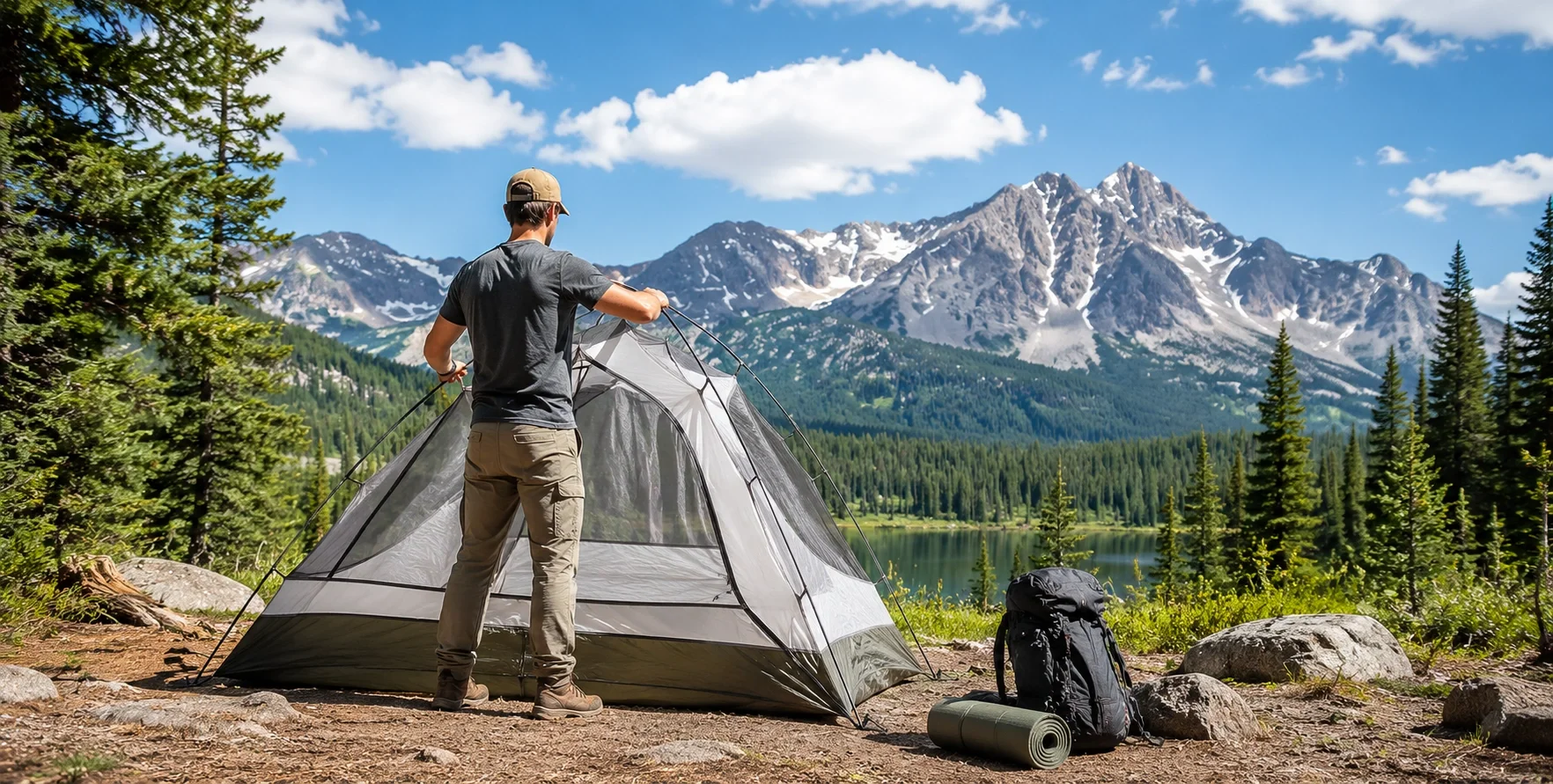
If you have never camped before, the amount of information out there can feel overwhelming. Tent sizes, sleeping bag ratings, stove fuel types, campsite reservations — where do you even begin? The good news: camping is fundamentally simpler than it appears once someone breaks it down into clear steps.
This page is that breakdown. We have distilled everything a first-time camper needs into a logical, step-by-step pathway. No fluff, no assumptions about what you already know, no skipping ahead to advanced topics. By the time you finish reading this guide, you will know exactly what to buy, where to go, what to do when you get there, and how to handle the most common challenges beginners face.
The most important thing to understand upfront: you do not need a fortune or expert-level skills to have a great first camping trip. Car camping at a developed campground with basic gear is all it takes. Our first-time camping tips article expands on the key mindset shifts that make the difference between a miserable weekend and the start of a lifelong hobby.
Your 4-Step Quick-Start Path
Choose Your Style
Car camping at a developed campground is the best starting point for virtually all beginners.
Learn about car camping →Get Core Gear
You only need 8 essential items for your first trip. Everything else is optional.
See the gear list →Pick a Campsite
Choose a nearby state park with restrooms, flat ground, and cell service.
Find a campsite →Go Camping
Plan a 1-night trip close to home. Arrive early. Keep meals simple. Have fun.
Plan your trip →Step 1: Choose Your Camping Style
Your camping style determines everything else — what gear you need, where you can go, what investment tier makes sense, and what skills you need. For your first trip, the choice is straightforward.
For 95% of beginners, car camping is the clear answer. You drive to a developed campground, park next to your site, and unload everything from your car. There are no weight restrictions, no hiking required, and most campgrounds have restrooms, water spigots, and flat, cleared areas for your tent. If something goes wrong, you can always drive home or to a nearby store.
Other styles like backpacking, wild camping, and primitive camping require specialized skills and lightweight gear that are better pursued after you have a few car camping trips under your belt. Glamping is an option if you want the outdoor setting without any setup at all — our camping vs glamping comparison can help you decide.
If you are camping with children, family camping follows the same car camping approach but with additional gear and planning. If you are going alone, solo camping is absolutely doable for beginners — just start at a well-populated campground with cell service. Our complete camping styles guide covers every option in detail.
Step 2: Get Your Essential Gear
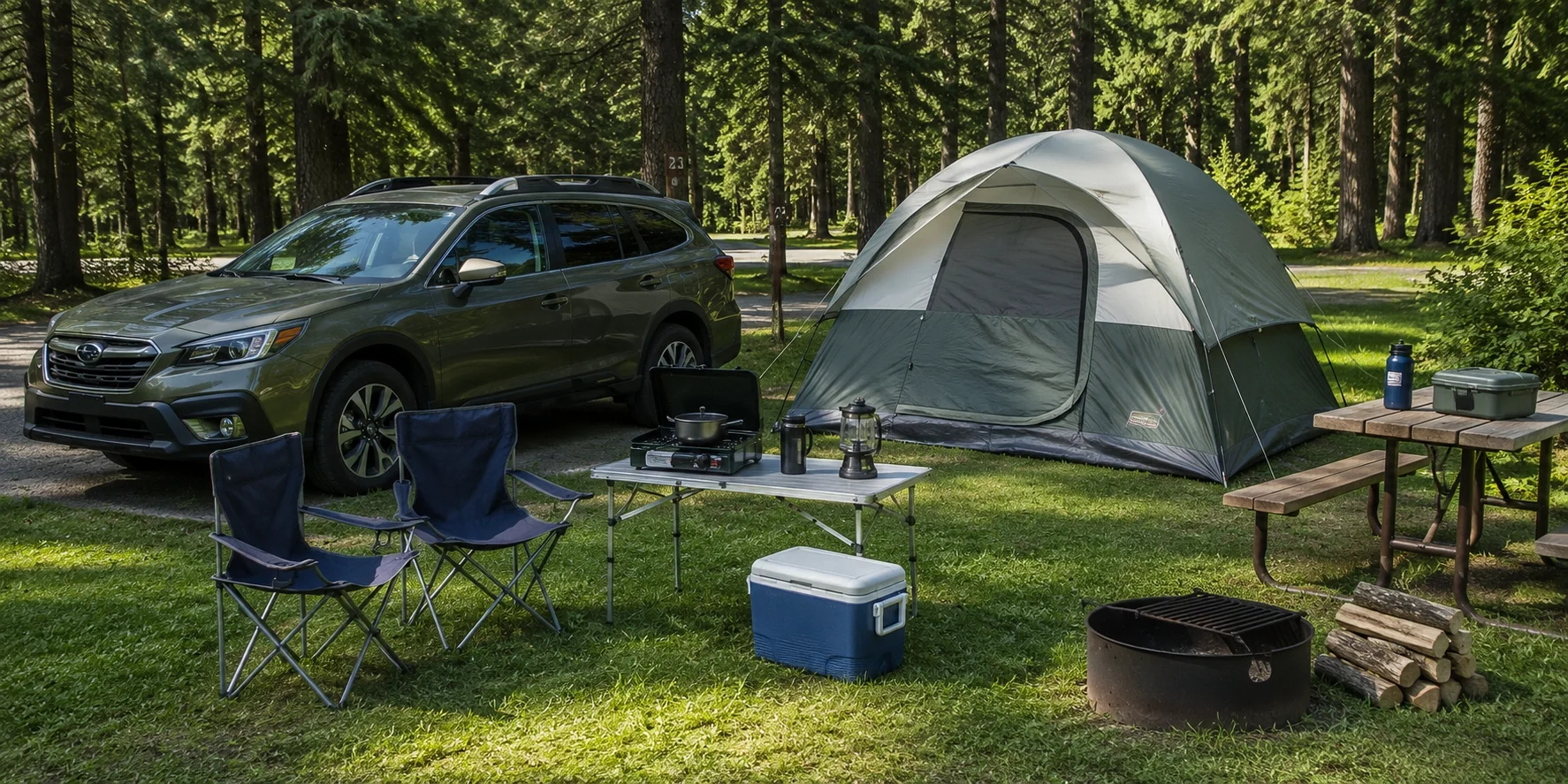
You do not need to buy everything at once. Start with the "Must Have" items below — these are non-negotiable for any camping trip. "Should Have" items dramatically improve comfort and are worth getting before your first trip if your budget allows. "Nice to Have" items can wait until your second or third trip.
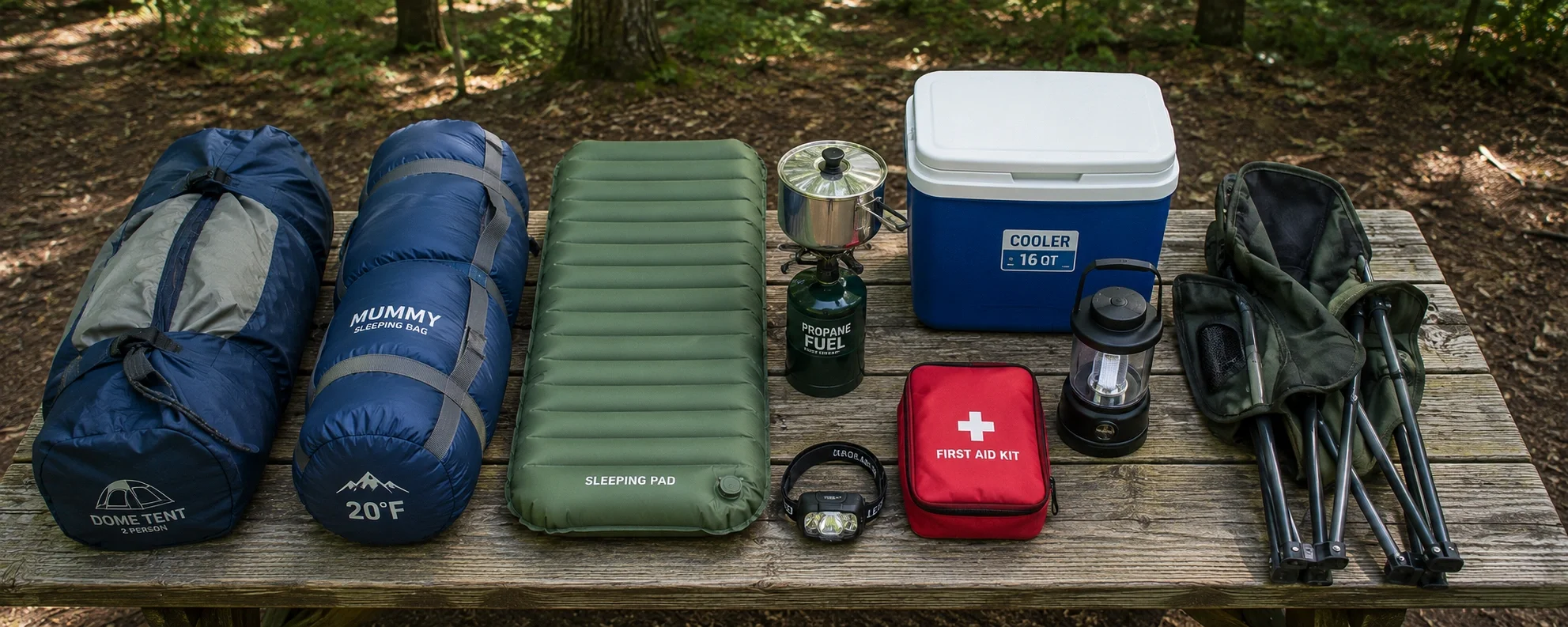
Camping Tent
A 4-person tent gives two people room to sleep comfortably with space for gear. Learn how to choose tent size before buying. Practice setting it up in your backyard first.
Sleeping Bag
Choose a sleeping bag rated 10–15°F below the lowest temperature you expect. A 30°F bag works for most summer and fall camping in the US.
Sleeping Pad
A sleeping pad provides insulation from the cold ground — this is not optional, even in summer. Foam pads are the most accessible; self-inflating pads offer better comfort.
Camp Stove
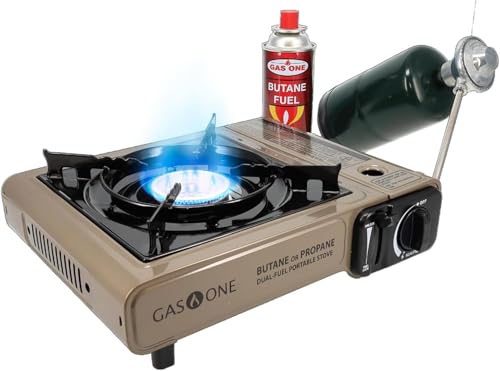
A basic two-burner propane stove is reliable, easy to use, and cooks like a small kitchen. Bring extra fuel canisters — one per day is a safe minimum.
Cooler
A 50-quart cooler holds food for 2–3 days. Pre-chill everything before packing, use block ice instead of cubes, and keep it in the shade.
Lighting
Bring a lantern for the campsite area and a headlamp for personal use. Extra batteries are essential — always pack more than you think you need.
First Aid Kit
A pre-assembled camping first aid kit should include bandages, antiseptic, pain reliever, blister treatment, and any personal medications.
Water & Food
One gallon of water per person per day. Plan simple camping meals — foil packet dinners, sandwiches, and one-pot recipes are ideal for beginners.
Camping Chairs
A camping chair for each person makes a huge difference in comfort. Sitting on the ground or a log gets old fast, especially after a long day.
Camp Table
A folding camp table gives you a stable surface for cooking, eating, and organizing gear. Many campgrounds have picnic tables, but having your own adds flexibility.
Cookware & Utensils
Basic pot and pan, utensil set, plates, bowls, and a camping kettle for boiling water. A cutting board and knife complete a functional camp kitchen.
Tarp & Rope
A tarp with paracord provides rain shelter over your cooking area or tent entrance. Even if the forecast is clear, a tarp weighs almost nothing and can save your trip.
Camping Pillow
A camping pillow compresses small and dramatically improves sleep quality compared to stuffing clothes in a sack.
Camp Blanket
A camping blanket is perfect for sitting around the fire in the evening or as an extra layer on cold nights.
Mosquito Protection
Bug spray, a mosquito coil, or a screened shelter. Mosquito protection can make the difference between a pleasant evening and a miserable one.
Starter gear investment: The "Must Have" items typically fall within the entry-level to mid-range tier overall, with many items lasting for years. You can reduce your initial outlay significantly by borrowing gear from friends for your first trip. Our beginner camping checklist has a printable version of this list that you can take shopping. If you want to see everything organized by trip type, browse our full camping checklists collection.
Step 3: Pick a Beginner-Friendly Campsite
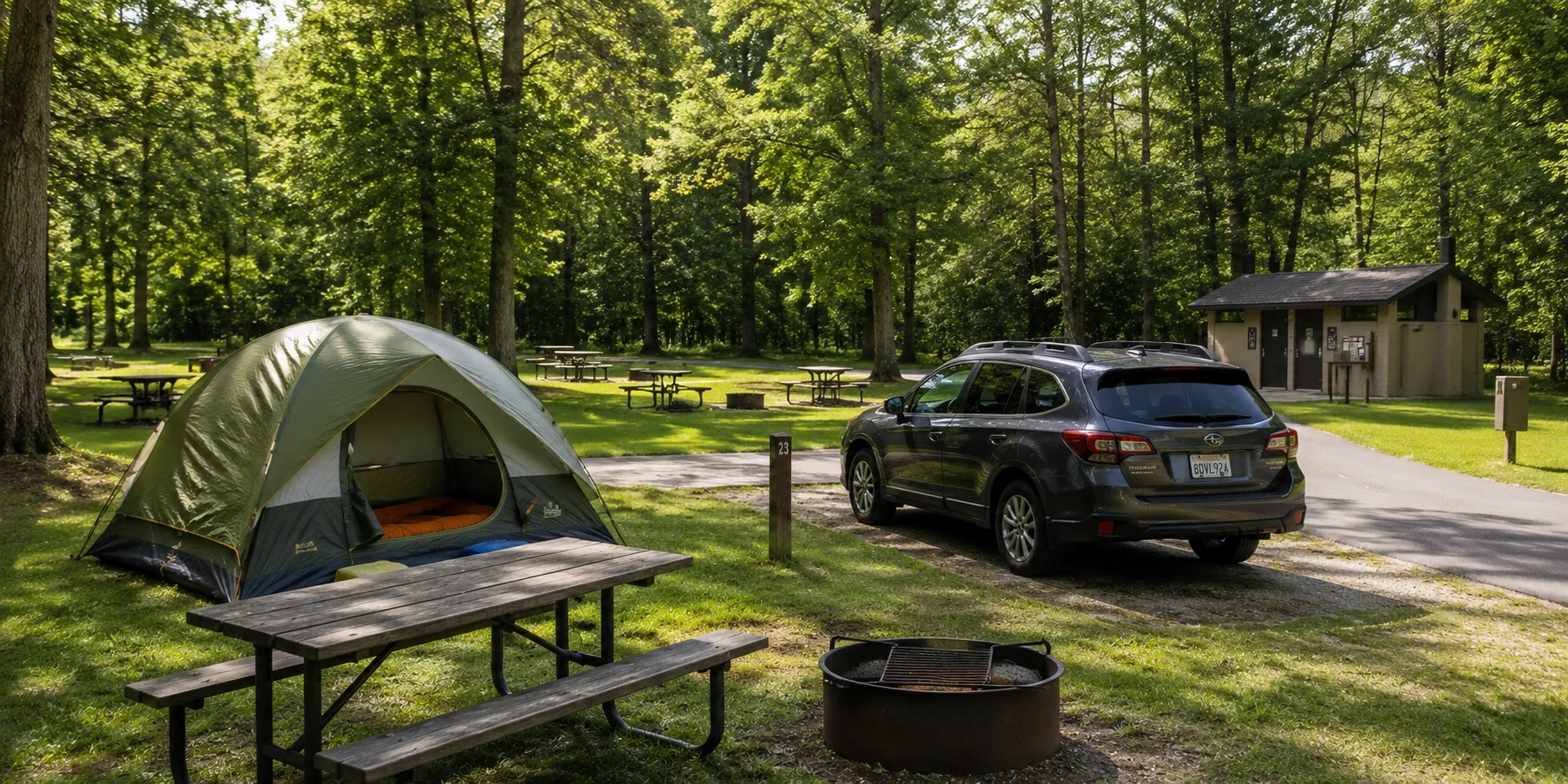
Your first campsite should be close to home (within 1–2 hours), at a state park or well-maintained campground with basic amenities. This is not the time to chase remote wilderness spots — save that for after you have learned the basics.
Look for these features: restrooms with running water, flat and level ground for your tent, a picnic table, a fire ring or grill, and cell service coverage. Check whether the campground accepts reservations — many popular sites fill up weeks in advance, especially on weekends. Our guide on whether you need a reservation explains when booking ahead is essential versus when you can arrive as a walk-in.
Avoid these for your first trip: dispersed camping areas with no facilities, backcountry sites requiring hikes, campgrounds known for heavy bear activity, and any location where the forecast shows severe weather. The best time to camp for beginners is late spring through early fall, when temperatures are mild and daylight hours are long.
For destination ideas, our camping destinations section has detailed guides organized by region. Good beginner-friendly options include state park campgrounds in your home state, which are typically well-maintained, easy on the budget, and close to home.
Step 4: Learn Basic Safety Before You Go
Safety knowledge is not optional — it is the one area where cutting corners can have serious consequences. These are the non-negotiable safety basics every beginner must understand before their first trip.
Campfire Safety
Never leave a fire unattended. Keep water and a shovel nearby. Build fires only in designated rings. Keep the fire small and below the ring walls. Fully extinguish before sleeping or leaving — learn the proper drowning-stir-feel method. Before building any fire, check local fire ban conditions. A single spark can start a wildfire, and the legal consequences are severe. Read our complete campfire safety rules before your trip.
Food Storage
Never store food in your tent — ever. This attracts bears, raccoons, rodents, and insects. Keep all food, coolers, and scented items (toothpaste, sunscreen, deodorant) in your locked car or in a bear-proof storage box if provided. In bear country, this becomes critical — proper food storage from bears is one of the most important skills you can learn. Our food storage rules guide covers all scenarios.
Weather Awareness
Check the forecast the morning of your trip and again when you arrive. Understand that weather in mountainous or forested areas can change rapidly. If thunderstorms are predicted, know the lightning safety rules: avoid open areas, tall isolated trees, and water. If temperatures will drop below your sleeping bag rating, bring extra layers or reconsider the trip. Our weather alerts guide explains what to watch for.
Wildlife Basics
Most wildlife encounters are avoidable through proper food storage and awareness. Make noise while hiking so animals know you are coming. Never approach or feed wild animals. Store trash the same way as food. If you are camping in bear country, carry bear spray and know how to use it. For general wildlife awareness, read our snake and wildlife safety guide and bug protection tips.
Share Your Plan
Always tell someone exactly where you are camping, which campground and site number if reserved, when you expect to return, and what to do if they do not hear from you by a specific time. This is especially important for solo camping but applies to all trips. If you are going beyond cell service, consider carrying a satellite communicator. Our emergency preparedness guide has a complete trip plan template.
⚠️ Important Reminder
This page covers safety fundamentals, but it is not a substitute for thorough preparation. Our dedicated camping safety section covers wildlife safety, weather emergencies, first aid, and emergency communication in much greater detail. We strongly recommend reading the relevant safety guides for your specific camping location and season before every trip.
Step 5: Plan and Execute Your First Trip
Here is a realistic, tested plan for your very first camping trip. Follow this exactly, and you will have a successful experience — even if things do not go perfectly.
One Week Before: Book and Pack
Reserve your campsite (or confirm it is first-come, first-served). Gather all your gear using the first-time camping checklist. Set up your tent in your backyard or living room at least once — this single step prevents the most common first-trip frustration. Test your stove to make sure it lights. Pre-plan your food packing list and buy groceries the day before departure.
Day Of: Arrive Early
Aim to arrive at your campsite by 2:00–3:00 PM at the latest. Setting up camp in daylight with time to spare eliminates 90% of first-timer stress. Check in at the campground office, drive to your site, and assess the ground — look for level spots, avoid low areas that could pool water if it rains, and clear any rocks or sticks where your tent will go.
Setup: Tent First, Then Everything Else
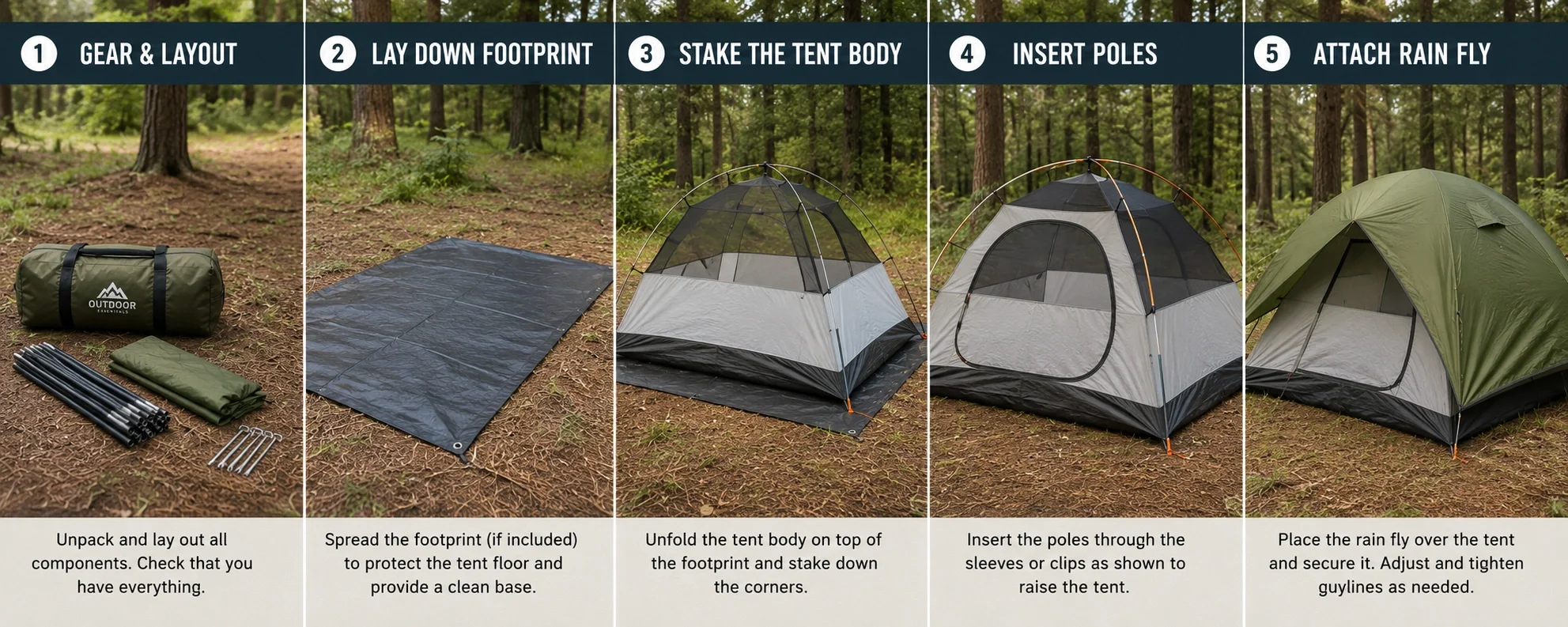
Put up your tent first while you have the most energy. Then set up your table, stove, and chairs. Hang your tarp if there is any chance of rain. Organize food in your cooler and store it in your car. Set up your lantern before it gets dark so you are not fumbling with it later.
Evening: Simple Dinner and Relax
Cook a simple meal — foil packet dinners, hot dogs, or pasta with pre-made sauce are foolproof. If your campground allows fires and there is no fire ban, build a small fire after dinner for ambiance. Do not try to cook over your campfire on your first trip; use your stove for reliability. Enjoy the evening. This is what you came for.
Night: Sleep Preparation
Before bed: store all food and scented items in your car, check that your tent is zipped fully closed, put your headlamp within arm's reach, and make sure your phone is charged. Dress in layers — it is always colder at night than you expect. If you followed the gear list, your sleeping pad and sleeping bag should keep you comfortable. If you get cold, add layers before adding blankets.
Morning: Pack Up Clean
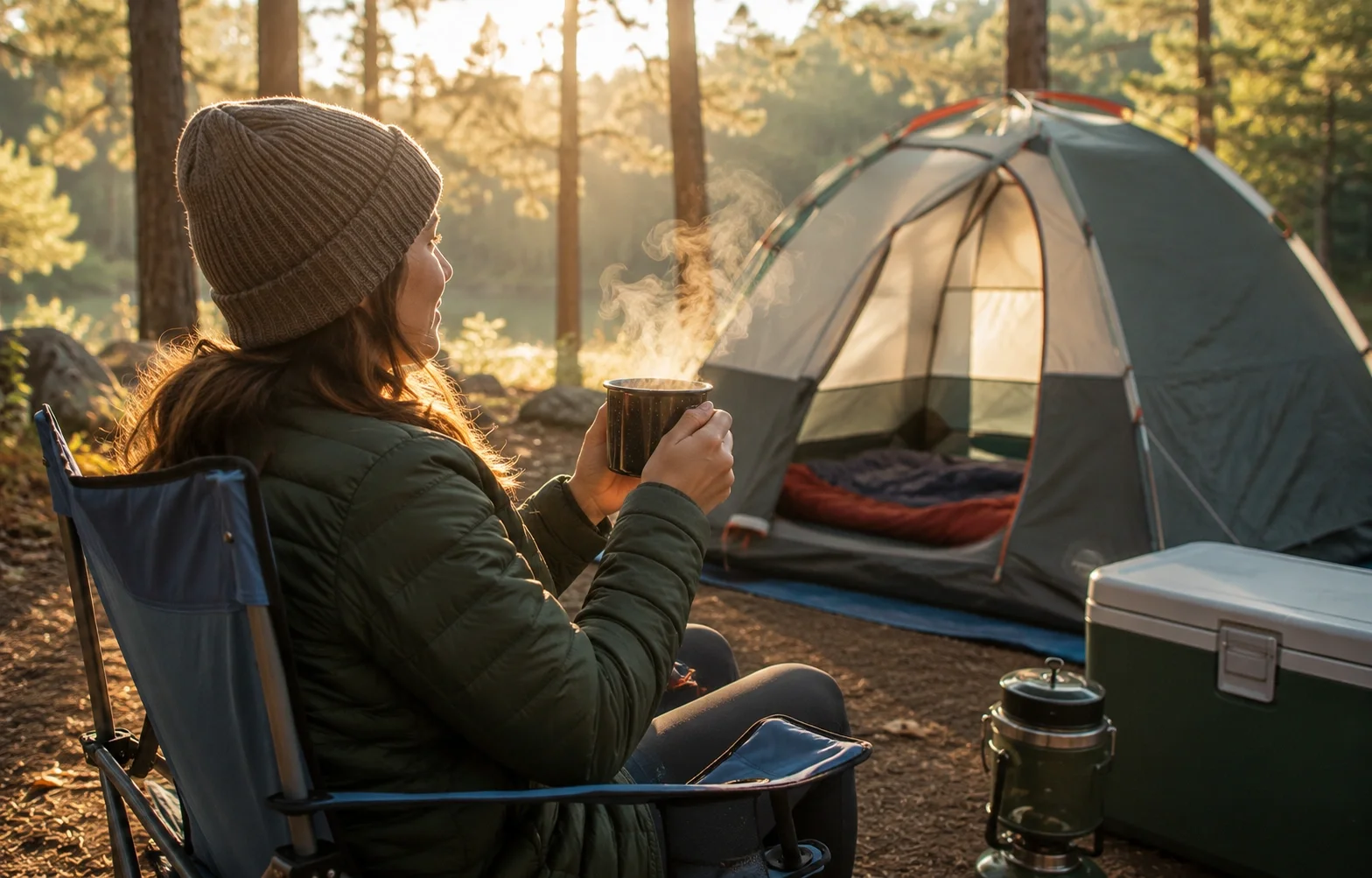
Wake up early — camping mornings are beautiful and the light is perfect. Make coffee or breakfast on your stove. Then break down camp systematically: pack everything inside the tent first, then collapse the tent (shake out dirt and debris), then load your car. Walk your site before leaving to make sure nothing is left behind. Leave No Trace — pack out all trash, even small items.
Common Mistakes Beginners Make
These are the mistakes we see over and over. Knowing about them in advance is half the battle.
✗ Buying a tent that is too small
Tent capacities are based on tight packing with no gear. A "2-person tent" barely fits two people with no room for bags. Always size up — get a 4-person tent for two people, or at minimum a 3-person. Our tent size guide explains the math.
✗ Skipping the sleeping pad
The ground absorbs your body heat through conduction. Even in 70°F weather, the ground temperature can drop to 50°F at night. Without a sleeping pad, your sleeping bag will not keep you warm. This is the single most common cause of miserable first trips.
✗ Arriving at camp after dark
Setting up a tent with a headlamp for the first time, on unfamiliar ground, when you are tired from driving, is a recipe for frustration. Arrive no later than mid-afternoon on your first trip. There is no advantage to arriving late.
✗ Overpacking or underpacking food
Some beginners bring an entire grocery store; others bring two granola bars for a weekend. Plan specific meals for each day plus one extra meal as a buffer. Our food packing list has a proven template for 1–3 day trips.
✗ Not testing gear beforehand
Set up your tent at home. Light your stove. Inflate your sleeping pad. Discover missing parts or broken components in your backyard, not at the campsite. This 30-minute investment prevents most first-trip disasters.
✗ Storing food in the tent
This mistake can range from a minor annoyance (raccoons raiding your snacks) to a life-threatening situation (a bear investigating your tent). All food and scented items go in your locked car, always. No exceptions. Read our food storage rules.
✗ Ignoring the weather forecast
Check the forecast for your specific campground location, not just the nearest city. Mountain weather can differ dramatically from valley forecasts. If the forecast shows storms, heavy rain, or dangerous heat, reschedule. There is no shame in that.
✗ Forgetting comfort items
Camping does not have to mean suffering. A camping pillow, a comfortable chair, and a warm blanket for the evening transform the experience from "enduring the outdoors" to "enjoying the outdoors." Small comforts make a big difference.
Beginner-Friendly Camping Destinations
These destinations are known for well-maintained facilities, beautiful scenery, and beginner-appropriate conditions. Start here, then explore further as your confidence grows.
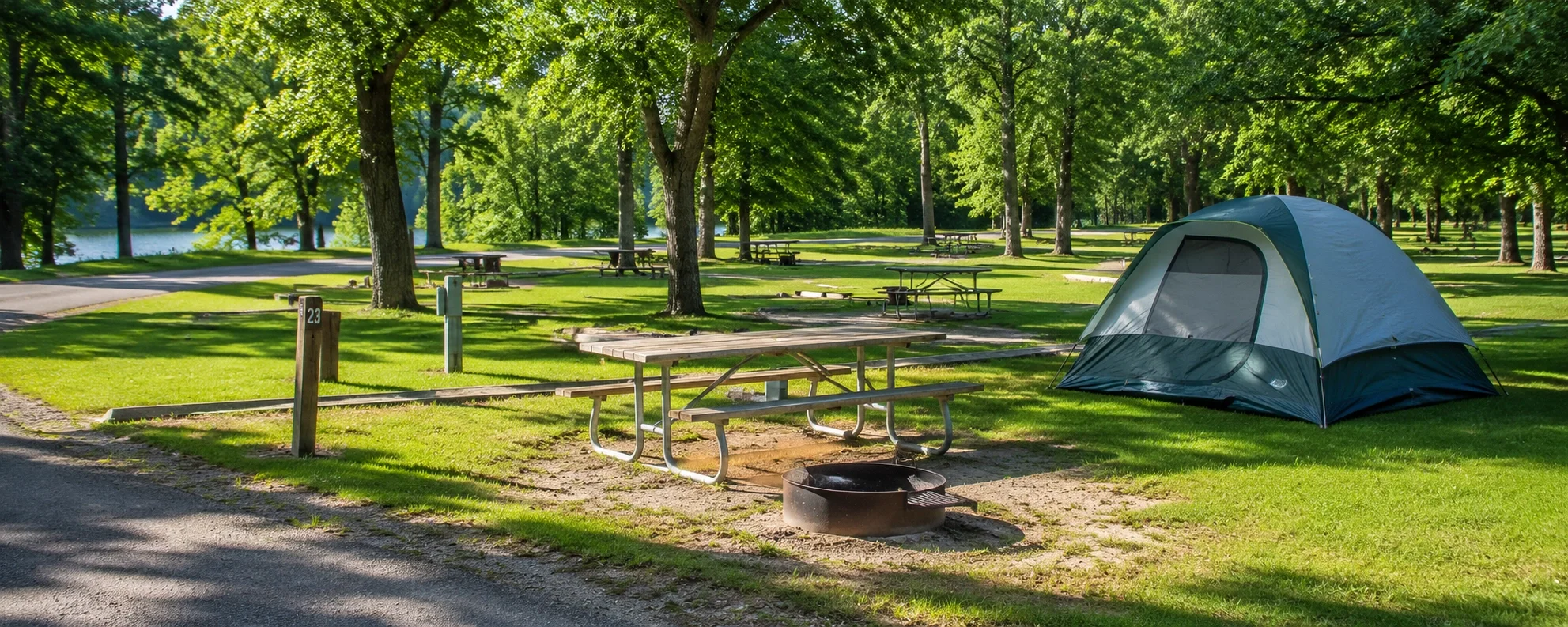
State Parks Near You
The best starting point for most beginners. Easy on the budget, well-maintained, and usually within driving distance of home.
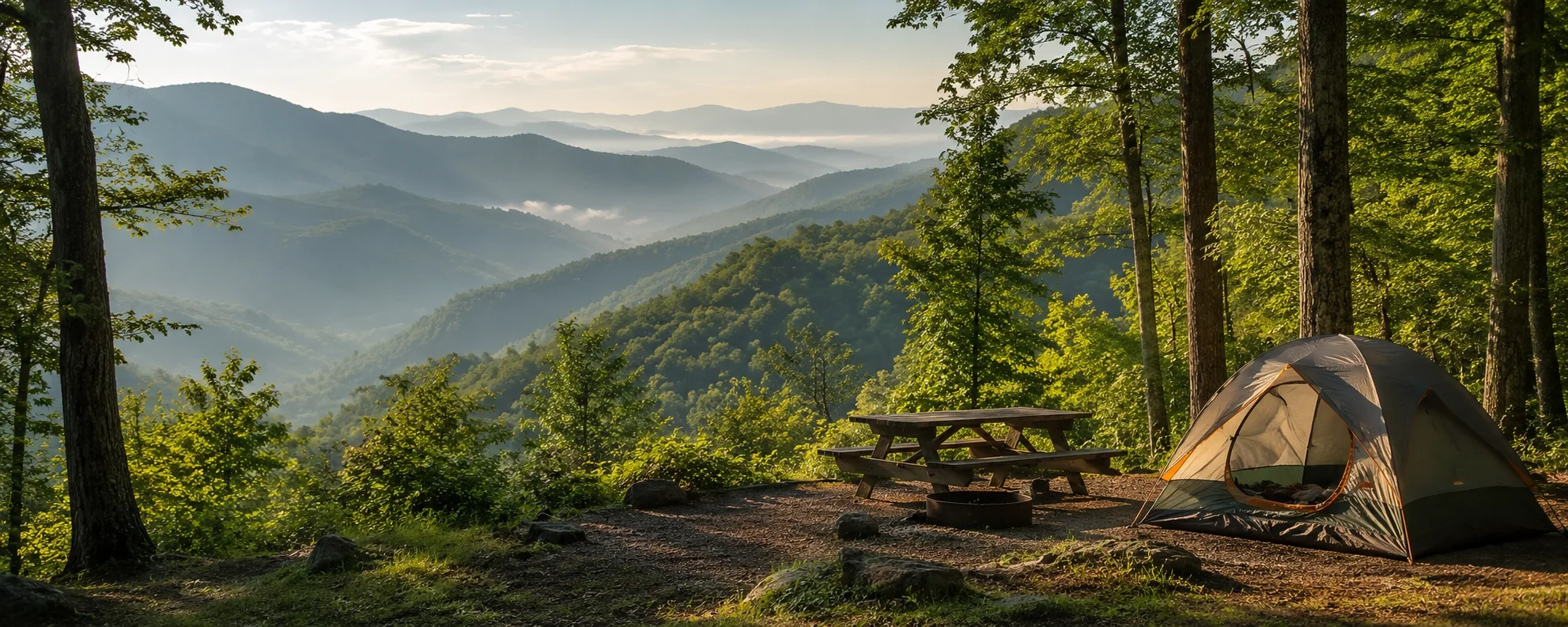
Great Smoky Mountains
The most visited national park in the US, with developed campgrounds that are perfect for first-timers. Stunning scenery with easy access.
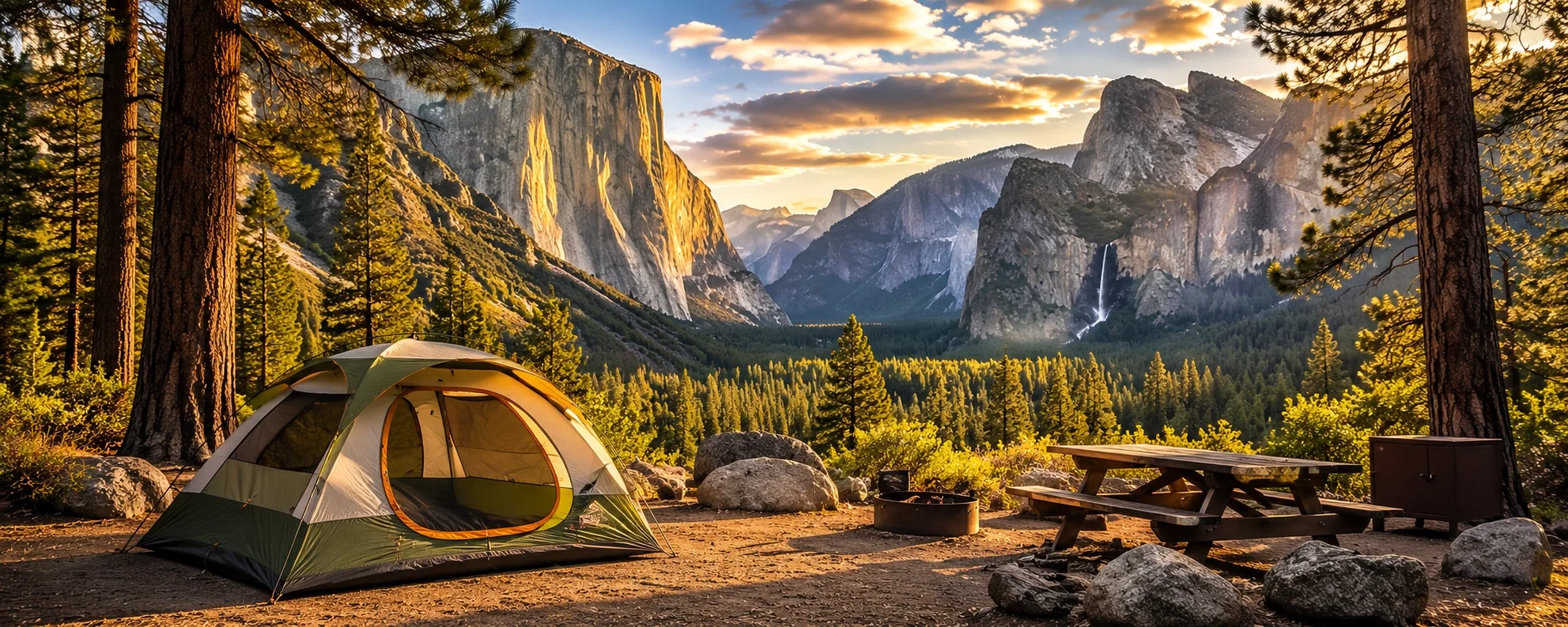
Yosemite National Park
World-class scenery with several developed campgrounds. Requires advance reservations but delivers an unforgettable first camping experience.
For your very first trip, pick a campground within one hour of home. This gives you an easy escape route if something goes wrong, eliminates the pressure of a long drive, and lets you focus on learning instead of logistics. As you gain experience, you can venture to more distant camping destinations like Colorado, Oregon Coast, or Florida Springs.
Beginner Camping FAQ
What Comes After Your First Trip?
Once you have completed your first camping trip, the real journey begins. Here is where to focus next based on your interests.