Stay Safe & Connected: The Ultimate Guide to Emergency Communication Devices
Explore the best satellite communicators, personal locator beacons, two-way radios, and emergency tech to keep you safe on every adventure.
Why This Matters: When you're miles from the nearest cell tower, your ability to call for help can be the difference between a close call and a tragedy. This guide breaks down the essential emergency communication devices for camping, hiking, and overlanding.
Your Options for Off-Grid Communication
Choosing the right device depends on your adventure type, budget, and need for two-way communication. Here’s a breakdown of the primary categories to help you decide.
Satellite Communicators
~$300 – $450+
These are the Swiss Army knives of emergency communication. They offer two-way messaging via satellite, GPS location sharing, and an SOS button to summon emergency services. Perfect for multi-day backpacking trips and remote expeditions.
- Best For: Backpackers, hikers, and mountaineers who want to stay in touch with family and have rescue capabilities.
- Key Feature: Two-way communication via satellite; often works with a smartphone app.
- Example: Garmin inReach Mini 2 or Spot X.
Personal Locator Beacons (PLBs)
~$400 – $500+
A PLB is a dedicated device for life-threatening emergencies. When activated, it sends a distress signal via the COSPAS-SARSAT satellite network directly to search and rescue authorities. It’s a one-way transmission, but it is incredibly reliable.
- Best For: Solo adventurers, boaters, and pilots who want a simple, no-subscription SOS button.
- Key Feature: Broadcasts a 406 MHz signal with GPS coordinates to rescue services.
- Example: ACR ResQLink 400.
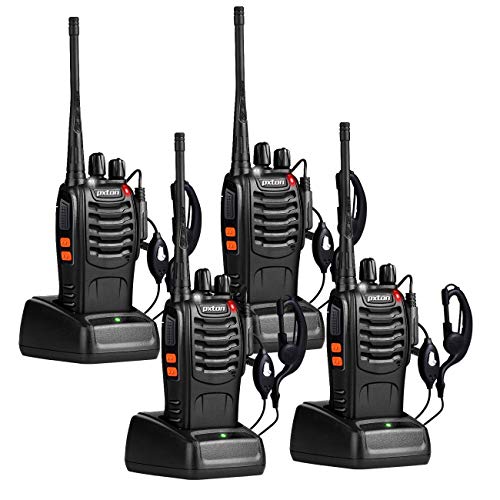
Two-Way Radios (Walkie-Talkies)
$50 – $360+
Ideal for group communication within a few miles. FRS radios require no license, while GMRS radios offer more power and range but require a $35 FCC license. They are not typically monitored by emergency services, but they are excellent for keeping your group together.
- Best For: Families and groups car camping or hiking within line-of-sight.
- Key Feature: Instant push-to-talk communication without cellular networks.
- Example: Midland X-Talker or Rocky Talkie.
Cellular Signal Boosters
~$200 – $600+
If you're camping in areas with a weak but existing signal, a booster can amplify that signal to make calls and send texts possible. It captures, amplifies, and rebroadcasts a signal inside your vehicle or tent.
- Best For: Overlanders and RVers who frequently camp in fringe coverage areas.
- Key Feature: Boosts existing cell signal for improved data and voice.
- Example: WeBoost Drive Reach.
Satellite Communicators vs. PLBs: The Detail
This is the most common dilemma for campers. Both can save your life, but they serve different purposes.
Satellite Communicators (like the Garmin inReach) are ideal if you want to send non-emergency messages to loved ones, track your route, and have the ability to text with rescue teams in an emergency. They are a complete communication solution, but they require a subscription plan [citation:11][citation:12].
Personal Locator Beacons (PLBs) are designed for one purpose only: to save your life in a critical emergency [citation:13]. They are rugged, reliable, and require no subscription. However, you can't send messages or share location with family; it's purely an SOS button that alerts the nearest rescue coordination center. For many, the subscription cost of a satellite communicator is worth the peace of mind and extra features [citation:10][citation:11].
Choosing the Right Walkie-Talkie
Walkie-talkies are perfect for staying in touch with your group at a festival or a large campsite. They come in two main types: FRS and GMRS [citation:8].
FRS (Family Radio Service) radios are license-free and great for short-range communication (0.5–2 miles). They are affordable and simple to use [citation:5]. GMRS (General Mobile Radio Service) radios offer higher power (up to 5 watts) and better range, making them suitable for rugged terrain. They require a simple $35 FCC license for the user, which covers an entire family [citation:5]. Many high-end models like the Rocky Talkie are built tough and waterproof for serious backcountry use [citation:5].
The Future: Direct-to-Device Satellite
Smartphone technology is rapidly evolving to include emergency satellite connectivity. Services like T-Mobile's T-Satellite, which uses Starlink's network, allow users to send SMS messages from their regular phone even when there is no cellular coverage [citation:3][citation:6]. This is a game-changer for casual adventurers who don't want to buy a dedicated device. While it's currently limited to messaging and not voice calls, it provides an excellent safety net and is becoming available on many new devices from Apple, Google, and Samsung [citation:3].
Which Emergency Communication Device is Best for You?
To make the final decision, ask yourself these questions:
- Where are you going? Remote backcountry? A satellite communicator or PLB is non-negotiable. A car campground with patchy signal? A booster or FRS radios might suffice.
- Who needs to know? If you want to update family and friends on your progress, a satellite communicator is your only choice.
- What's your budget? Factor in the initial cost of the device plus any ongoing subscription fees for satellite messengers.
No single device is perfect for every scenario. Many experts recommend carrying a combination: a satellite communicator for two-way messaging and a PLB as a reliable backup for emergencies [citation:10].
Plan Your Next Adventure Safely: Learn more about Camping Safety, check our Winter Camping guide, or browse our top picks for Power Banks and Solar Chargers to keep your devices charged.