Composting Toilet Guide: Eco-Friendly Sanitation for Camping
Discover how composting toilets work, their benefits, maintenance tips, and how to choose the best eco-friendly sanitation solution for your off-grid camping adventures.
START READINGWhy Choose a Composting Toilet for Camping?
For campers who venture off-grid, a composting toilet offers a sustainable, chemical-free alternative to traditional portable toilets. These systems use no water and require no chemicals, making them ideal for wild camping, van life, and remote adventures where disposal points are scarce [citation:1][citation:4]. By separating liquid and solid waste and promoting aerobic decomposition, composting toilets transform human waste into a dry, earthy material that is far less unpleasant to handle than chemical waste [citation:5].
This guide covers everything you need to know about composting toilets for camping: how they work, their pros and cons, maintenance requirements, and what to look for when choosing the right model for your needs.
How Composting Toilets Work
Composting toilets operate on a simple but effective principle: separation and aeration. At the point of use, the system diverts urine into a separate container while solid waste falls into a composting chamber. This separation is the key to odor control because it prevents the chemical reaction that creates unpleasant smells [citation:5][citation:10].
The solids chamber contains a carbon-rich bulking agent—typically coconut coir, peat moss, or wood shavings—which absorbs moisture, adds carbon, and creates air pockets for aerobic decomposition [citation:1][citation:2]. A small 12V fan provides continuous ventilation, drawing air through the chamber and venting it outside [citation:7]. This airflow keeps the material dry and promotes the breakdown process by microorganisms.
Over time, the solid material reduces in volume significantly. Depending on usage, the solids container typically needs emptying every two to four weeks, while the urine container requires more frequent attention [citation:5][citation:7].
Key Components of a Composting Toilet
- Urine Diverter: A funnel-like mechanism that channels liquid waste away from solids [citation:10].
- Solids Chamber: Contains bulking material and collects solid waste for composting [citation:1].
- Ventilation System: A fan and vent pipe that maintain airflow and eliminate odors [citation:7].
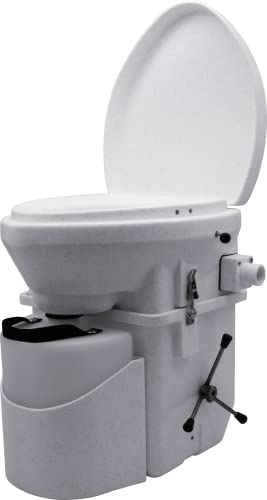
- Agitator (Optional): A crank handle to mix contents and prevent compaction [citation:5].
Composting Toilet vs Chemical Toilet: Which Is Right for You?
The choice between a composting toilet and a traditional chemical toilet (Porta Potti) depends on your camping style, budget, and environmental priorities. Both solve the same fundamental problem, but they do so in very different ways [citation:3].
| Feature | Composting Toilet | Chemical Toilet (Porta Potti) |
|---|---|---|
| Upfront Cost | $400–$1,500 (higher initial investment) [citation:3] | Under $100 (budget-friendly) [citation:3] |
| Operating Cost | ~$15/year (bulking material) [citation:3] | Ongoing cost for chemical fluids [citation:3] |
| Water Usage | None (dry toilet) [citation:1] | Requires water for flushing |
| Chemicals | Chemical-free [citation:1] | Requires chemical additives (formaldehyde-based or bio) [citation:1] |
| Waste Disposal | Solids can be disposed in regular trash or composted; liquids can be diluted and used as fertilizer [citation:5] | Requires dumping at designated Chemical Disposal Points [citation:1] |
| Installation | Requires vent hose and 12V fan; better for permanent/vehicle installs [citation:3][citation:4] | Portable; no installation needed |
| Odor Control | Minimal odor with proper ventilation [citation:5] | Chemical odor control; can be unpleasant if chemicals are low |
| Best For | Off-grid, van life, motorhomes, eco-conscious campers [citation:4] | Tent camping, budget trips, short-term use [citation:3] |
Many seasoned campers own both—a composting unit in the motorhome and a lightweight chemical portable for tent trips [citation:3]. Consider your typical camping scenarios and choose the option that best fits your needs.
Pros and Cons of Composting Toilets
Advantages
- Eco-Friendly: No chemicals and no water consumption; produces no black-water waste [citation:1].
- Odor-Free: When properly ventilated, composting toilets are virtually odorless [citation:5][citation:12].
- Long Intervals Between Emptying: Solids container needs emptying every few weeks, depending on usage [citation:5][citation:7].
- No Chemical Fluids to Buy: Save money and reduce plastic waste [citation:3].
- Liquid Waste Can Be Used: Diluted urine is a nitrogen-rich fertilizer for non-edible plants [citation:5].
- Environmentally Responsible: Reduces your environmental footprint and is ideal for Leave No Trace principles [citation:1].
Disadvantages
- Higher Upfront Cost: Quality composting toilets typically cost between $400 and $1,500 [citation:3][citation:5].
- Learning Curve: Requires time to understand the moisture balance and proper use to avoid odor issues [citation:2][citation:3].
- Installation Requirements: Needs a vent hose routed outside and a 12V power connection for the fan [citation:4].
- Bulkier Size: Generally larger than compact chemical toilets [citation:1].
- Not Ideal for Tent Camping: Size and ventilation requirements make them better suited for vehicle-based camping [citation:4].
- User Behavior Change: Men are encouraged to sit to pee to ensure proper urine diversion [citation:5].
💡 Who Should Choose a Composting Toilet?
Composting toilets are best for campers who camp off-grid frequently, value sustainability, have space for installation in a vehicle or shelter, and are willing to invest more upfront for long-term convenience and environmental benefits [citation:3][citation:4].
Composting Toilet Maintenance: Daily to Yearly Tasks
Proper maintenance is essential to keep your composting toilet odor-free and functioning efficiently. Follow this routine to ensure a pleasant experience [citation:2][citation:7].
Daily / After Each Use
- Add a scoop of bulking agent (sawdust, coir, or peat moss) after each solid deposit to absorb moisture and maintain the carbon-to-nitrogen balance [citation:2].
- Check the urine container level and empty before it reaches two-thirds full to prevent overflow [citation:7].
- Ensure the lid closes properly and the fan is running.
Weekly
- Empty the urine container completely and rinse it with mild detergent.
- Inspect the fan operation and vent pipe for blockages.
- Top up your supply of bulking material.
- Wipe the seat, seals, and accessible surfaces with a mild disinfectant or vinegar-water spray [citation:5].
Monthly
- Inspect seals and gaskets for wear and replace if necessary [citation:2].
- Clear any debris from vent screens and check for pest entry points.
- If you have an agitator, turn it regularly to mix the contents and prevent compaction [citation:5].
Seasonal / Yearly
- Deep-clean the pedestal and seat.
- Inspect the compost chamber for structural integrity.
- Replace worn seals and gaskets.
- Winterize the urine tank and hose to prevent freezing [citation:7].
- If using the compost in your garden, ensure it has cured for at least 6–12 months in a secondary bin before use on ornamental plants, shrubs, or fruit trees [citation:2].
🚨 Troubleshooting Common Issues
- Odor appears: Check the fan and vent for blockages, add more dry bulking material, and ensure the urine diverter is clean [citation:2][citation:7].
- Wet solids: Add extra carbon material (sawdust or coir) and reduce the amount of liquid entering the solids chamber [citation:2].
- Flies or pests: Ensure tight-fitting lids, install mesh on vent tops, and maintain a dry layer of desiccant over the waste [citation:2].
How to Choose a Composting Toilet for Camping
When selecting a composting toilet for your camping needs, consider the following factors to make an informed purchase.
1. Installation Type: Vehicle-Mounted vs. Portable
Vehicle-mounted units like the Nature's Head or Separett Tiny are designed for permanent installation in vans, motorhomes, and boats. They require a vent hose routed outside and a 12V power connection [citation:4][citation:7]. Portable units are lighter and can be moved between different setups but may not offer the same capacity or odor control.
2. Capacity and Emptying Frequency
Consider how many people will be using the toilet and how long your trips typically last. A larger solids container (14–25 liters) means less frequent emptying—ideal for extended off-grid stays [citation:5][citation:8]. Urine containers typically hold 4.6 to 10 liters and need emptying more often [citation:8].
3. Ventilation System
An active 12V fan is essential for odor control in small, sealed spaces like a van or motorhome [citation:7]. Ensure the fan is quiet and energy-efficient. Some systems offer passive (natural) ventilation that works without electricity, but these are less reliable in low-wind conditions [citation:8].
4. Build Quality and Materials
Look for units made from durable, easy-to-clean materials like ABS plastic with stainless steel hinges [citation:7][citation:9]. A robust build ensures longevity and a comfortable user experience.
5. Budget
Prices range from around $400 for basic units to over $1,500 for premium models like Nature's Head or Separett Villa [citation:3][citation:5][citation:7]. Consider the total cost of ownership, including bulking material and replacement parts, when budgeting.
6. User-Friendliness
Some models feature agitator cranks to mix the solids, while others use passive composting [citation:5]. Choose a design that you find intuitive and easy to maintain. The urine diverter should be easy to clean and direct liquids effectively [citation:10].
🔍 Popular Composting Toilet Brands
- Nature's Head: Rugged, reliable, and popular for vans and boats [citation:7].
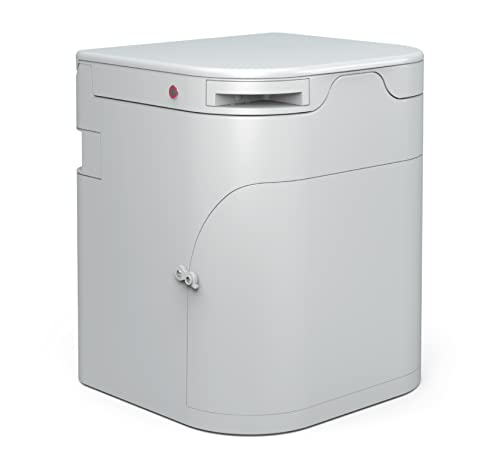
- Separett (Villa & Tiny): Sleek design, quiet fan, and well-suited for small spaces [citation:12].
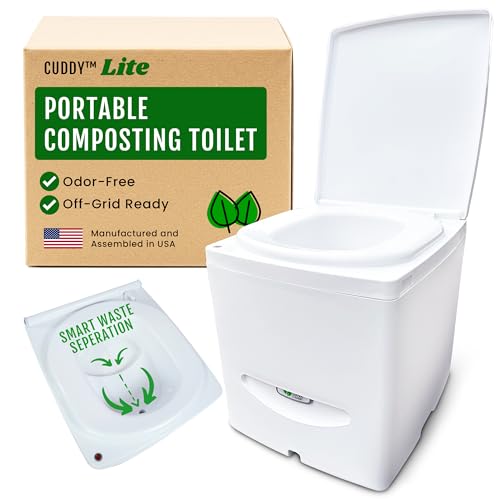
- Cuddy: Compact and lightweight, ideal for campervans [citation:5].
- TROBOLO: Offers both electric and natural ventilation systems with customizable containers [citation:8].
Check the recommended products section below for the latest models available online.
Explore More Camping Guides
Looking for more information to enhance your camping experience? Explore our other guides on camping gadgets, winter camping, and camping regulations to ensure you're fully prepared for your next adventure.
If you're planning an off-grid trip, check out our articles on wild camping and camping safety for essential tips and best practices.
Final Thoughts: Camping with a Composting Toilet
A composting toilet is a significant investment in your camping comfort and environmental responsibility. While the upfront cost is higher than traditional chemical toilets, the long-term savings on consumables, the freedom from chemical waste disposal, and the positive environmental impact make it a worthwhile choice for dedicated campers [citation:3][citation:12].
By understanding how these systems work and committing to regular maintenance, you can enjoy a clean, odor-free, and sustainable sanitation solution on all your off-grid adventures. Whether you're a van lifer, an overlander, or a back-to-nature enthusiast, a composting toilet is your ticket to a more self-reliant and eco-friendly camping lifestyle.