
Backpacking Sleeping Pads for Side Sleepers
Stop waking up with aching hips and shoulders. Discover how to choose a backpacking sleeping pad that supports side sleeping without weighing down your pack.
Side sleeping is the most common position — and the hardest to support on the trail. Unlike back sleepers who distribute weight across a wide surface, side sleepers concentrate pressure on a small area: the hip, shoulder, and ribcage. A pad that feels plush in the store can turn into a torture device after a long day of hiking.
This guide breaks down exactly what makes a sleeping pad work for side sleepers: thickness, cell structure, material, and warmth. You will learn how to evaluate any pad before you buy, which features matter most, and how to match a pad to your body type and backpacking style — without carrying unnecessary ounces.
What Side Sleepers Need From a Sleeping Pad
Minimum 2.5 Inches
Thickness is non-negotiable. Anything under 2.5 inches allows your hip to bottom out against the ground.
Vertical Baffles
Vertical or hybrid baffles create a stable sleeping surface that resists collapsing under concentrated pressure.
Adequate R-Value
Warmth matters more for side sleepers because compressed insulation loses loft where your body presses down.
Weight vs. Comfort
Ultralight pads save grams but often sacrifice thickness. Find the balance that matches your trip style.
Thickness and Design: The Core of Side Sleeper Comfort
The single most important specification for a side sleeper is thickness. When you lie on your side, your hip and shoulder become pressure points. A thin pad — even a comfortable one for back sleepers — will compress completely at those points, leaving you effectively sleeping on the ground. For most adults, 2.5 inches (6.4 cm) is the absolute minimum, and 3 inches or more is strongly preferred.
Beyond raw thickness, the internal structure of the pad determines how well it maintains that thickness under load. Sleeping pads use two main designs:
- Horizontal baffles: Tubes run side-to-side. These are common in entry-level pads and can create a "roller" effect where your hip sinks between baffles. Less ideal for side sleepers.
- Vertical baffles: Tubes run head-to-toe. This design distributes weight more evenly and resists bottoming out. Best choice for side sleepers.
- Hybrid or dimpled designs: Some premium pads use a grid of small cells or a combination of vertical and horizontal baffles. These can offer excellent support and stability, often at a higher weight or cost.
R-Value and Warmth: Why Side Sleepers Get Cold
The R-value measures a sleeping pad's ability to resist heat loss. Higher numbers mean warmer. For three-season backpacking, an R-value of 3.0 to 4.0 is a solid baseline. For winter or cold sleepers, look for 4.5 or higher.
Side sleepers face a unique challenge: when you compress a pad with your hip, you also compress the insulation inside it. Air pads rely on trapped air and reflective layers; foam pads rely on cell structure. In both cases, the compressed area loses warmth. This means a side sleeper may feel cold at the hip and shoulder even when the rest of their body is comfortable.
To combat this, choose a pad with a higher R-value than you think you need, or pair a lower-R pad with a closed-cell foam pad underneath for extra insulation and puncture protection. If you frequently camp in cold weather, our guide to winter camping gear covers layering strategies in detail.
Air, Foam, or Self-Inflating? Choosing the Right Type
Backpacking sleeping pads fall into three main categories, each with distinct trade-offs for side sleepers:
| Pad Type | Best For | Side Sleeper Suitability | Typical Tier |
|---|---|---|---|
| Air Pads | Ultralight backpacking, packability | Excellent if 3+ inches thick with vertical baffles. Can feel unstable if too thin. | Premium / Mid-range |
| Self-Inflating Pads | General camping, durability, moderate weight | Good if 2.5+ inches thick. Foam adds stability but can be bulkier. | Mid-range / Entry-level |
| Closed-Cell Foam Pads | Ultralight, bombproof, emergency use | Poor for side sleepers alone. Best used as a supplement under an air pad. | Entry-level |
For most side sleepers, an air pad with vertical baffles and a thickness of 3 inches or more offers the best combination of comfort, warmth, and packability. Self-inflating pads are a close second, especially for campers who prioritize durability and don't mind a bit more weight. Closed-cell foam pads are best reserved as a supplemental layer or for emergency kits.
If you are building a complete ultralight sleep system, you may also want to explore lightest sleeping pad for backpacking options, but be aware that the lightest pads often sacrifice the thickness side sleepers need.
Weight and Packability: Balancing Comfort With Carry
Every ounce counts on the trail, but side sleepers have a legitimate reason to carry a slightly heavier pad: comfort directly affects recovery and enjoyment. A bad night's sleep on a thin pad can ruin the next day's hike.
Here is how to think about the weight trade-off:
- Ultralight (under 1 lb): Typically 2 to 2.5 inches thick. Acceptable for back sleepers, but most side sleepers will bottom out. Best for fastpacking or warm-weather trips where you can tolerate less comfort.
- Mid-weight (1 to 1.5 lbs): Often 2.5 to 3 inches thick with better baffle design. The sweet spot for most side sleepers.
- Comfort-focused (1.5 to 2+ lbs): 3 to 4 inches thick, often with plush surfaces and higher R-values. Ideal for basecamp-style trips or cold-weather camping where comfort is paramount.
Packability is also a factor. Air pads compress to the size of a water bottle; self-inflating pads are bulkier. If you are tight on pack space, an air pad is usually the better choice. For more tips on packing efficiently, see our guide to essential things to pack for camping.
How to Test a Sleeping Pad Before You Buy
If you can visit a store, test the pad the way you actually sleep. Lie on your side for a full five minutes. Check for:
- Hip bottoming out: Can you feel the floor through the pad at your hip? If yes, it is too thin.
- Shoulder pressure: Does your shoulder feel pinched or compressed? A good pad should cradle it slightly without collapsing.
- Stability: Does the pad wobble or feel like a waterbed? Vertical baffles usually provide a more stable surface.
- Surface grip: Does your sleeping bag slide around? A textured surface helps.
If you cannot test in person, read reviews from other side sleepers specifically. Look for pads that are frequently described as "stable," "supportive," or "no hip pain." Be cautious of pads praised for being "ultralight" without mentions of thickness — they may not suit your needs.
Ready to Sleep Comfortably on Your Side?
Browse our curated selection of backpacking sleeping pads designed for side sleepers — with thickness, baffle design, and R-value clearly noted.
See Recommended Pads ↓Matching the Pad to Your Body Type
Not all side sleepers are built the same. Your body weight and height affect how much support you need:
- Lighter sleepers (under 140 lbs): Can often get away with 2.5-inch pads. Focus on baffle design and surface texture.
- Average sleepers (140–200 lbs): 3-inch pads are ideal. Look for vertical baffles and a stable base.
- Heavier sleepers (over 200 lbs): 3.5 to 4-inch pads are strongly recommended. Also check the pad's weight capacity and warranty.
Height matters too. A pad that is too short forces your feet or head off the edge, creating pressure points. Most pads come in regular (72 inches) and long (78 inches) sizes. If you are over 6 feet tall, consider a long version. For more on matching gear to your body, see our tent size guide — the same principles of fit apply.
Maintenance Tips for Long-Lasting Comfort
A high-quality sleeping pad is an investment. Protect it with these habits:
- Always use a ground sheet or footprint under your tent to prevent punctures from sharp rocks or debris.
- Inflate with a pump sack or hand pump when possible. Blowing air into the pad with your breath introduces moisture that can grow mold inside.
- Store unrolled and deflated with the valve open. This prevents the internal foam or baffles from compressing permanently.
- Clean with mild soap and water only. Avoid harsh chemicals that can degrade the material.
- Carry a repair patch kit — most pads come with one, but double-check before your trip.
If you are camping in areas with rough terrain, consider adding a anti-condensation mat or a thin foam layer under your air pad for extra protection. This also boosts warmth, which side sleepers appreciate.
Frequently Asked Questions
For most adults, 2.5 inches (6.4 cm) is the absolute minimum. However, 3 inches or more is strongly recommended, especially if you weigh over 150 pounds or sleep on your side with your bottom leg extended. Thinner pads allow your hip to bottom out, leading to pressure points and poor sleep.
Air pads with vertical baffles and 3+ inches of thickness are generally the best choice for side sleepers who backpack. They offer superior comfort and packability. Self-inflating pads are a good alternative if you prioritize durability and don't mind extra weight. Closed-cell foam pads alone are not recommended for side sleepers — they are too thin and offer no pressure relief.
Side sleepers compress the insulation at their hip and shoulder, creating cold spots. This means a side sleeper may need a higher R-value than a back sleeper for the same conditions. As a rule of thumb, add 0.5 to 1.0 to the R-value you would choose for back sleeping. For three-season camping, aim for R-3.5 to R-4.5.
Yes, but look for a pad with a stable, non-bouncy surface. Air pads with vertical baffles or hybrid designs tend to be more stable than horizontal baffles. Also consider a pad with a slightly textured or grippy surface to prevent your sleeping bag from sliding. Some side sleepers also benefit from a wider pad (25+ inches) for more room to move.
Start with a thick, supportive pad (3+ inches). Use a pillow between your knees to align your spine and reduce hip pressure. If you still experience pain, try a pad with a softer top layer or add a thin foam layer underneath for extra cushioning. Stretching before bed and sleeping on a slight incline can also help.
Best Backpacking Sleeping Pads for Side Sleepers
⚠️ AFFILIATE DISCLOSURE: This website contains affiliate links. As an Amazon Associate, we earn from qualifying purchases. If you make a purchase through these links, we may receive a small commission at no additional cost to you. Read our full affiliate policy.

ZOOOBELIVES Inflatable Camping Sleeping Pad, 4-Inch Thick Full Air Support, No Bottoming Out for Side Sleepers, Camping & Backpacking Mattress with Built-in Foot Pump, Durable & Compact – Airlive2000

FUN PAC Camping Sleeping Pad, Ultralight Camping Mat with Pillow, Built-in Foot Pump Inflatable Sleeping Pads Compact for Camping Backpacking Hiking Traveling Tent,Single,Green

ZOOOBELIVES Inflatable Camping Sleeping Pad, 4-Inch Thick Full Air Support, No Bottoming Out for Side Sleepers, Camping & Backpacking Mattress with Built-in Foot Pump, Durable & Compact – Airlive2000

Sleeping Pad for Camping, Built-in Pump with Pillow | Waterproof, Air Mattress for Backpacking, Hiking, Tent, Overnight Travel, Compact & Comfortable for Outdoor Adventures

Oramoose 2 Pack 4-Inch Camping Sleeping Pads with Foot Pump and Pillow
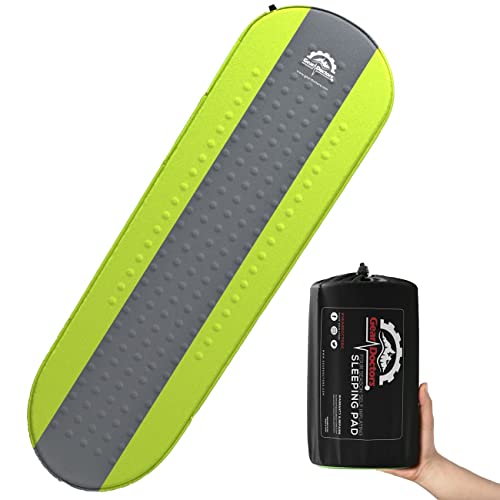
Gear Doctors® Oxylus 4.3 R-Value Insulated Air Foam Self Inflating Sleeping Pad Camping —Sleeping Pad Backpacking Air Mattress—Camping Mattress Self Inflating Camp Mat 4 Seasons Sleep Mat Compact Pack

Oramoose 4-Inch Camping Sleeping Pad with Foot Pump
Disclaimer
Outdoor activities involve inherent risks. The information provided on CampLifeEssentials is for educational purposes only. We are not responsible for any injuries, losses, or damages resulting from the use of this information. Some content may use AI assistance. Always practice Leave No Trace principles and verify local regulations before camping. If you do not agree, please do not use this website. Read the full disclaimer.